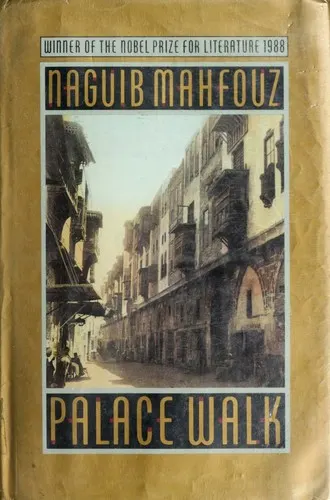
Books like Palace Walk
The lingering hunger is for another household so fully inhabited that meals, marriages, money, and private hypocrisies become a whole society in miniature—and history can be felt pressing against every door.
If you liked Palace Walk, you’ll love these
Not lookalikes — kindred books. Each one shares something essential with Palace Walk, and we tell you exactly what.
Like Mahfouz, Tanizaki makes family ritual irresistibly consequential. Four sisters in a once-prominent Osaka family must negotiate reputation, money, marriage, and changing ideas of womanhood. A matchmaking visit or an awkward letter can carry the suspense of a political crisis because the family’s future is encoded in every courtesy.
The perspective is more female and the authority more diffuse than in Palace Walk, but the same tension animates both novels: affection persists inside a system that constrains everyone. Tanizaki renders a vanishing social order with sensuous precision and gentle, devastating irony. Often considered his masterpiece, this is one of those rare long novels whose world readers miss after leaving it.
For the comedy, cruelty, and claustrophobia of Mahfouz’s domestic scenes, read Naipaul’s great Trinidad novel. Mohun Biswas is born unlucky and grows into a prickly, thwarted man determined to possess a house of his own. Marriage draws him into the enormous Tulsi clan, whose crowded rooms and shifting alliances make privacy, dignity, and independence almost impossible.
Naipaul sees his hero without sentimentality but never without sympathy. Mr Biswas can be vain, ridiculous, tender, and genuinely brave within a single episode—the kind of contradictory humanity Mahfouz gives al-Sayyid Ahmad and his family. Widely regarded as the Nobel laureate’s masterpiece, the novel turns one man’s modest desire for a home into something comic, painful, and heroic.
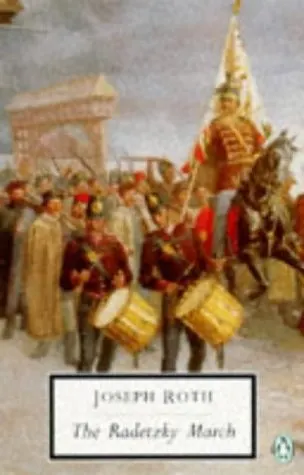
Roth offers the same exhilarating sense that a family’s habits are inseparable from a civilization’s fate. The Trotta family rises through an act of battlefield heroism, then finds itself bound to the aging Austro-Hungarian Empire and its elaborate codes of duty. Fathers and sons struggle to speak honestly while uniforms, rank, and inherited expectations dictate their lives.
Where Mahfouz is expansive, Roth is compressed and elegiac: a gesture at dinner or an official visit can expose an entire structure of obedience. His irony is exact but compassionate, and political decline arrives not as a lecture but as a change in music, manners, and confidence. Commonly acclaimed as Roth’s masterpiece, The Radetzky March makes the passing of an old order feel at once intimate, absurd, and heartbreaking.