Author
Books like Barry Unsworth
4 books we recommend to Barry Unsworth readers, drawn from Sacred Hunger and The Quality of Mercy — each with the reason why.
If you loved Sacred Hunger
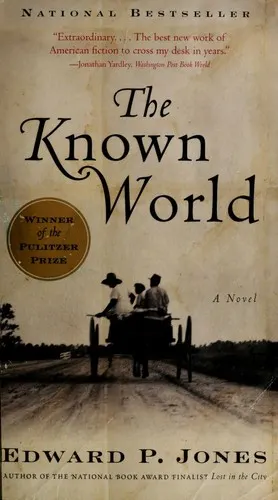
Jones shares Unsworth’s rare ability to portray slavery not simply as individual cruelty but as an entire social reality, maintained by paperwork, custom, ambition, fear, and self-deception. Beginning with the death of a Black slaveholder in antebellum Virginia, the novel moves freely through his community, illuminating enslaved people, owners, families, officials, and fugitives without sorting them into morally convenient types.
Its omniscient narrator can disclose a life’s future in a sentence or expose an institution’s absurdity with devastating calm. The result is panoramic yet intimate—the same combination that gives *Sacred Hunger* its force. Winner of both the Pulitzer Prize and the International Dublin Literary Award, *The Known World* is now regarded as a modern American classic. Its moral imagination is so complete that afterward many historical novels seem merely costumed.
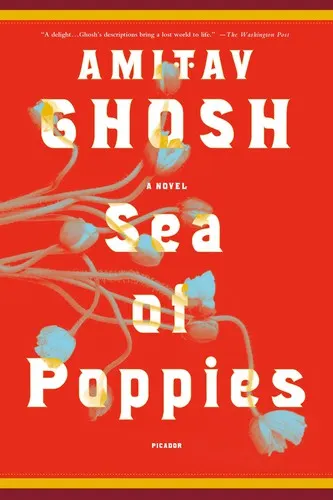
Ghosh offers the exhilaration of watching a ship become a whole unstable world. On the eve of the Opium Wars, the *Ibis* gathers sailors, laborers, convicts, merchants, and runaways whose languages and social ranks collide. What binds the novel to *Sacred Hunger* is not merely the sea voyage but its understanding that empire operates through appetites—for profit, narcotics, labor, and respectability—and that those appetites reshape individual bodies and destinies.
Where Unsworth is austere and mordant, Ghosh is sensuous, linguistically exuberant, and teeming with invention. His polyphony gives people treated as economic units the power to rename themselves and form unexpected loyalties. Shortlisted for the Booker Prize and opening the celebrated Ibis Trilogy, *Sea of Poppies* combines formidable research with the momentum of a great adventure. It makes global history feel crowded, volatile, and urgently alive.
If you loved The Quality of Mercy
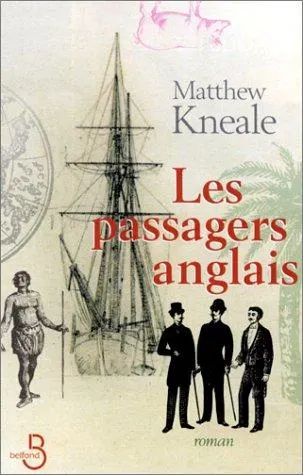
Twenty narrators crowd into this fiercely intelligent voyage to nineteenth-century Tasmania: sailors, settlers, officials, Aboriginal people and a deluded clergyman convinced that Eden lies at journey’s end. Their voices contradict one another, often comically, until the comedy reveals the evasions by which conquest becomes respectable.
Like Unsworth, Kneale understands that historical evil is sustained not only by monsters but by contracts, theories, ambitions and convenient vocabulary. Winner of the Whitbread Book of the Year and shortlisted for the Booker, English Passengers combines panoramic storytelling with lethal irony. Few novels make imperial self-deception so entertaining—or so difficult to forget.
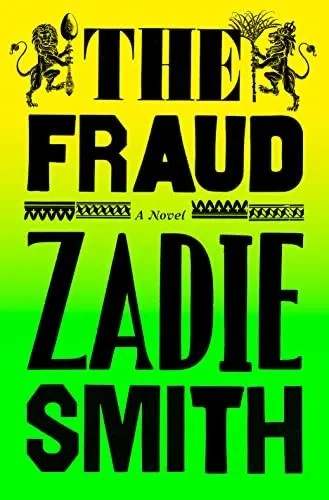
Eliza Touchet, intelligent, skeptical and constrained by her position in a celebrated novelist’s household, becomes fascinated by the sensational Tichborne trial. Around that public spectacle, Smith constructs a searching novel about who is believed, who gets to tell history and how British respectability depends upon suffering kept safely elsewhere.
The kinship with The Quality of Mercy lies in its distrust of moral theater. Courtrooms and reformist convictions may promise justice, but both novels keep asking what happens when sympathy costs its possessor something. Smith’s first historical novel is crowded, argumentative and wonderfully alert to hypocrisy; miss it and you miss one of the sharpest recent dissections of the stories a nation tells to acquit itself.