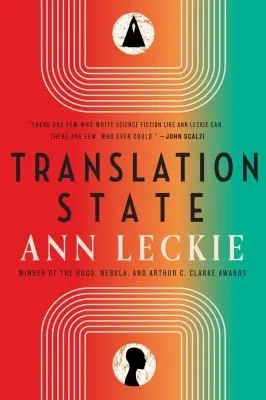
Books like Translation State
Recognition. Translation State makes identity feel at once intimate, bodily, political, and hilariously bureaucratic. These novels likewise treat personhood not as a settled fact but as something negotiated through language, law, family, and encounters with genuinely different minds.
If you liked Translation State, you’ll love these
Not lookalikes — kindred books. Each one shares something essential with Translation State, and we tell you exactly what.
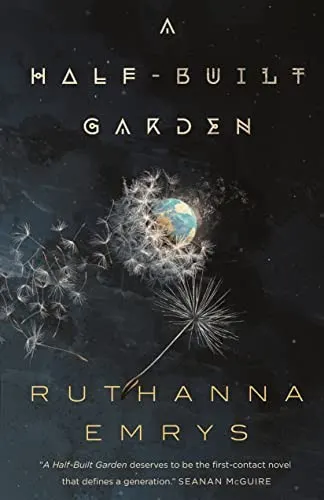
This is the closest match for Leckie’s rare combination of humane first contact, queer domestic life, and serious political argument. When aliens arrive offering to rescue humanity, Earth is no longer organized solely around familiar states and corporations; watershed communities and unconventional families have built new ways of sharing power.
Emrys makes negotiation thrilling because every disagreement rests on incompatible ideas about kinship, survival, and responsibility. Like Translation State, the novel refuses to separate civilization-shaping diplomacy from meals, children, attraction, and household friction. Its aliens are neither monsters nor uncomplicated saviors, and its warmth never blunts its intellectual bite. If you loved watching Leckie turn family into a contested political category, this generous, ingenious novel is indispensable.
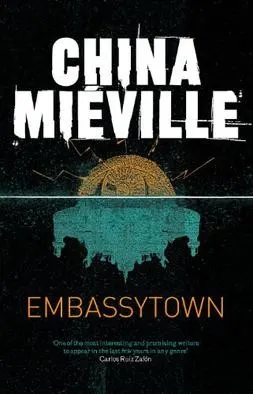
Read this for the vertigo of Qven’s chapters: the sense that language, consciousness, and the body might fit together in ways humans can barely apprehend. On a remote world, human ambassadors communicate with the indigenous Ariekei, whose Language can be spoken only under extraordinary conditions. Then one new arrival destabilizes that relationship.
Miéville does not merely give his aliens unusual customs; he constructs a form of mind that changes what truth, metaphor, and speech can mean. The result is stranger and more demanding than Translation State, but it shares Leckie’s conviction that confronting radical difference should transform everyone involved. A Locus Award winner and one of Miéville’s most admired novels, Embassytown is the book to read when ordinary fictional aliens have begun to seem disappointingly human.
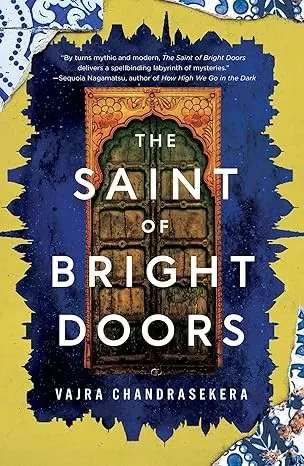
Fetter was raised to assassinate his messianic father. Instead, he reaches the city of Luriat, joins a support group for people burdened by grand destinies, and encounters mysterious doors that everyone has trained themselves not to notice.
That premise opens into a dazzling examination of imposed identity. Chandrasekera shares Leckie’s gift for making bureaucracy absurd, menacing, and metaphysically consequential: official categories do not merely describe people but determine whose existence counts. Yet the novel remains slyly funny, alive to friendship, and deeply sympathetic to anyone trying to escape the role assigned by family or society.
Winner of both the Nebula and Crawford awards, The Saint of Bright Doors is one of the most original speculative debuts of recent years. Its world is unlike Leckie’s, but its central question is unmistakably kindred: how do you become a person when powerful systems have already decided what you are?