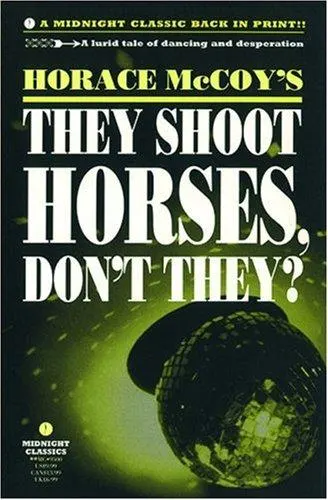
Books like They Shoot Horses, Don't They?
You responded to McCoy’s ruthless economy, doomed momentum, and vision of suffering turned into entertainment; these three novels strike those same nerves in sharply different ways.
If you liked They Shoot Horses, Don't They?, you’ll love these
Not lookalikes — kindred books. Each one shares something essential with They Shoot Horses, Don't They?, and we tell you exactly what.
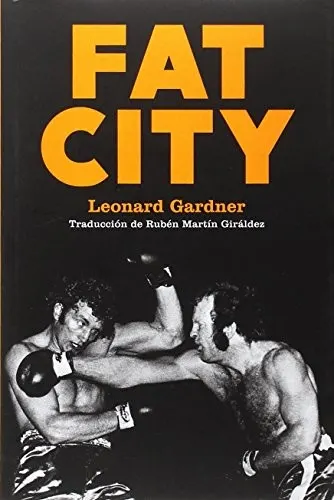
Gardner’s cult classic follows small-time boxers in Stockton, California, but its real subject is defeat: the jobs that exhaust people, the hopes that keep reviving after experience has disproved them, and the body as the last asset the poor can sell.
Like McCoy, Gardner writes with extraordinary restraint. He never prettifies hardship or begs for sympathy; a shabby room, a bruising shift, or a disappointed expectation carries the whole weight. Often called one of the greatest boxing novels, Fat City is greater still as a novel of economic entrapment. If McCoy’s dance marathon felt like an entire social order compressed into an arena, Gardner performs the same feat with the boxing ring.
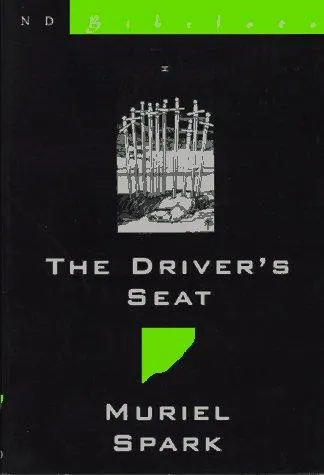
If what seized you was McCoy’s fatalistic structure—the sense that the ending is already waiting while the characters move helplessly toward it—read Spark’s slim, unnerving masterpiece. Lise, its abrasive and mysterious protagonist, travels south from northern Europe, apparently searching for someone she calls her “type.” Almost immediately, Spark disrupts ordinary suspense by revealing where the journey leads.
The result is not a conventional thriller but a viciously funny, formally audacious study of compulsion, identity, and death. Spark’s crystalline sentences make the grotesque seem horribly lucid. At scarcely more than a hundred pages, The Driver’s Seat has the same concentrated aftershock as McCoy’s novel: it can be read in an evening and remain insoluble for years.
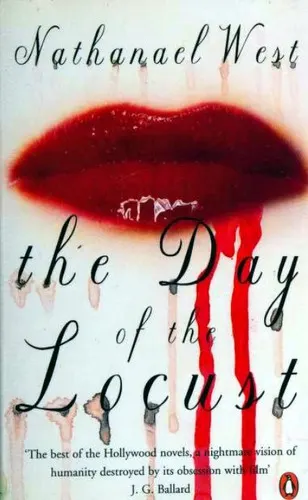
West turns Hollywood into a landscape where fantasy has curdled into grievance. His central figures are bit players, dreamers, hustlers, and spectators—people promised transcendence by mass culture and left with boredom, humiliation, and rage. The comedy is grotesque, but never merely eccentric: every absurd detail adds pressure to West’s vision of a public trained to crave sensation.
Published in 1939, the same year as They Shoot Horses, Don’t They?, it has become one of the defining American novels about spectacle and collective desperation. West’s prose is more hallucinatory than McCoy’s, but the moral intelligence is comparably merciless. Read it and the dance marathon begins to look not like an isolated cruelty, but like one chamber in a much larger national nightmare.