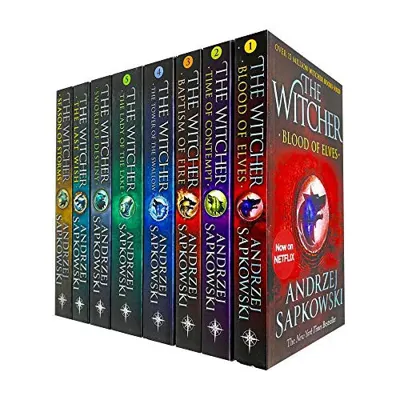
Books like The Witcher
A white-haired stranger enters an inn, asks quietly for a drink, and lets the room mistake restraint for weakness. These three novels share Sapkowski’s sharpest pleasures: mordant voices, compromised heroes, dangerous folklore, and moral choices no code can simplify.
If you liked The Witcher, you’ll love these
Not lookalikes — kindred books. Each one shares something essential with The Witcher, and we tell you exactly what.
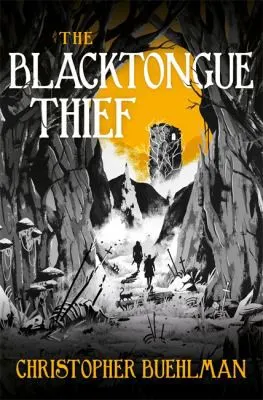
Kinch Na Shannack is a trained thief burdened by debt, bad luck, and a mouth that keeps making both worse. When an attempted roadside robbery collides with a formidable warrior’s mission, he is dragged into a journey through a world permanently scarred by war with goblins.
Buehlman matches Sapkowski’s rare ability to make fantasy funny without making its dangers frivolous. Kinch’s narration is bawdy, cunning, and unexpectedly tender; songs, curses, religions, and card games make the world feel lived in rather than catalogued. Its monsters belong to unsettling folklore, while its human institutions are often more predatory still. The result is one of modern fantasy’s most distinctive adventures—and Kinch is the kind of rogue whose company becomes difficult to leave.
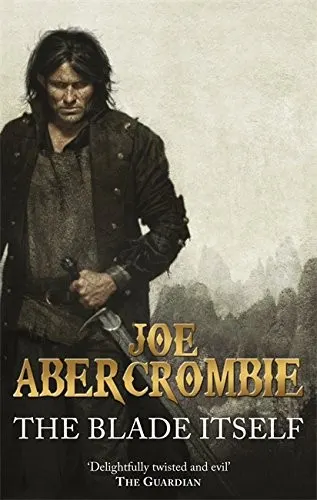
Abercrombie introduces three wonderfully ill-fitting protagonists: Logen Ninefingers, a feared warrior tired of surviving; Jezal dan Luthar, a vain young officer; and Sand dan Glokta, a former hero now employed as a torturer. Their alternating perspectives turn every claim of honor, heroism, or civilization until its uglier underside shows.
What Witcher readers will recognize is not simply “grimness,” but the collision between professed ideals and actual behavior. Abercrombie’s dialogue snaps, his violence has consequences, and even appalling characters become horribly understandable. This novel helped define modern grimdark because its cynicism is powered by superb characterization rather than empty cruelty. Begin here and you gain entry to the First Law world, one of contemporary fantasy’s most fiercely loved bodies of work.
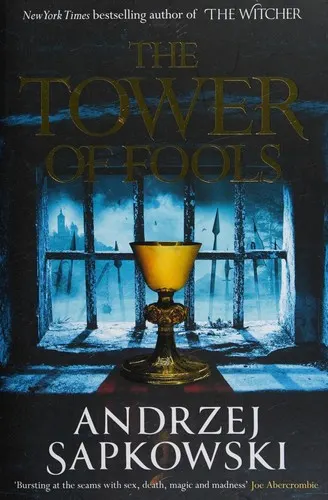
If what you loved most was Sapkowski himself—the erudite jokes, abrupt brutality, argumentative dialogue, and delight in puncturing romantic legends—his Hussite Trilogy is indispensable. Reinmar of Bielawa, a learned young man with disastrously poor judgment, is discovered in a compromising affair and flees into a Central Europe convulsed by religious war.
This is historical fantasy as a picaresque fever dream: theology rubs shoulders with sorcery, political conviction with opportunism, and high culture with very low comedy. Reinmar is less capable than Geralt, which lets Sapkowski be even more merciless about youthful idealism and history’s appetite for individuals. Long celebrated in Poland before its English translation, the trilogy reveals that the qualities readers call “Witcher-like” are really Sapkowski’s singular voice—and nowhere else can that voice be imitated this exactly.