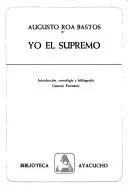
Books like I, the Supreme
Where The Autumn of the Patriarch turns absolute power into a torrential fever dream, The Palace of Dreams renders it as a hushed, immaculate bureaucracy. The Obscene Bird of Night completes the trio by making unstable identity itself a form of imprisonment. All three match Roa Bastos not merely in ambition, but in their conviction that tyranny colonizes language, memory, and the shape of a novel.
If you liked I, the Supreme, you’ll love these
Not lookalikes — kindred books. Each one shares something essential with I, the Supreme, and we tell you exactly what.
This is the essential companion to I, the Supreme: not simply another dictator novel, but another audacious attempt to invent a prose capable of embodying absolute power. García Márquez writes in enormous, surging sentences whose voices and eras flow into one another; the patriarch is at once a decrepit man, a national myth, and a fiction continually rewritten by rumor.
Where Roa Bastos uses documents, corrections, and competing narrators to sabotage the Supreme’s authority, García Márquez dissolves authority in a collective hallucination. The result is grotesque, mournful, and often very funny. Widely regarded as one of García Márquez’s greatest formal achievements, it shows the Latin American Boom at its most daring: history becomes syntax, and despotism infects every clause.
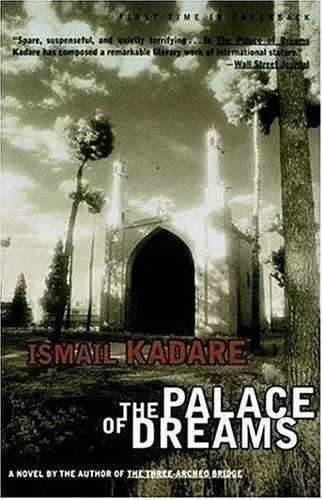
Kadare begins with an irresistible bureaucratic nightmare: an imperial institution gathers the dreams of every subject, classifies them, and searches for the one dream that may foretell danger to the state. A young man entering this apparatus gradually encounters a world in which interpretation is more terrifying than surveillance.
A reader of Roa Bastos will recognize the deeper kinship: power does not merely prohibit speech; it seizes control of meaning. Yet Kadare’s method is strikingly different—cool, spare, and eerily lucid rather than baroque. The novel’s attack on totalitarian administration was sufficiently legible to cause political trouble in communist Albania, and it remains one of Kadare’s most admired works. Few novels make filing, annotation, and textual analysis feel so ominous.
If what enthralled you in I, the Supreme was the sense that voices, bodies, and identities could no longer be kept separate, Donoso’s masterpiece pushes that instability even further. It opens in a decaying religious house populated by old women, servants, rumors, and grotesque stories; soon every apparent boundary—master and dependent, observer and monster, memory and invention—begins to buckle.
Donoso’s prose builds a claustrophobic world where social hierarchy survives by inventing deformity and then hiding it away. The novel is difficult in the exhilarating sense: it keeps transforming beneath the reader, demanding surrender rather than passive comprehension. Long revered as one of the darkest and most formally radical novels of the Latin American Boom, it offers the same rare pleasure as Roa Bastos—the feeling that the book is dismantling its own machinery while you read.