
Books like The Stranger
If what gripped you was Camus’s stripped-down voice, moral unease, and sense that ordinary life rests over an abyss, these three novels pursue that experience in strikingly different ways.
If you liked The Stranger, you’ll love these
Not lookalikes — kindred books. Each one shares something essential with The Stranger, and we tell you exactly what.
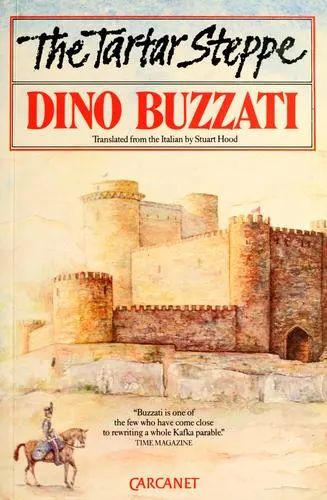
Buzzati turns existential dread into an eerily lucid fable. A young officer arrives at a remote fortress where everyone waits for an enemy who may never come; routines, ambitions, and postponements gradually acquire the weight of fate.
Like Camus, Buzzati writes plainly enough to make the irrational feel inevitable. But where The Stranger compresses its crisis into confrontation, The Tartar Steppe finds terror in time itself—in the suspicion that a life can disappear while one waits for it to begin. Long regarded as Buzzati’s masterpiece, it is one of those rare novels that permanently alters the emotional meaning of waiting.
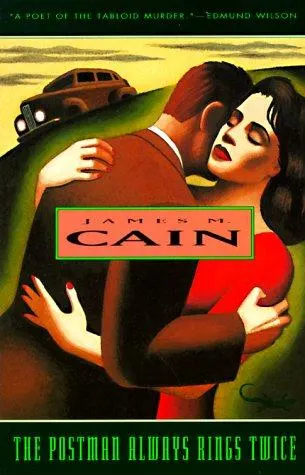
Read Cain for the dangerous velocity of his prose. From its opening, the narrator speaks with blunt, bodily directness: hunger, sex, money, and impulse arrive before explanation or remorse. The sentences are so lean that every action seems both freely chosen and grimly unavoidable.
This hard-boiled landmark belongs in the same conversation as The Stranger not simply because crime enters both books, but because neither supplies the comforting moral commentary readers expect. Cain makes you inhabit consciousness without offering an alibi for it. Its influence on twentieth-century crime writing is immense, yet the novel remains stranger and more philosophically disturbing than many of its descendants.
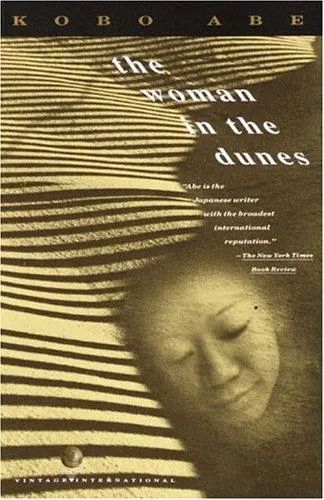
An amateur entomologist travels to a remote coastal village and encounters a landscape governed by sand—shifting, invasive, and indifferent to human plans. Abe makes that physical world extraordinarily vivid: grit, sweat, thirst, and labor become the materials of a philosophical ordeal.
A lover of Camus will recognize the collision between the body’s immediate demands and the mind’s hunger for meaning. Yet Abe is more surreal, more tactile, and darkly playful; his absurdity feels less like an argument than a place you have entered. Winner of Japan’s Yomiuri Prize and now an international classic, The Woman in the Dunes is existential fiction with the grip of a nightmare and the precision of an experiment.