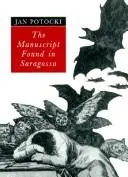
Books like The Manuscript Found in Saragossa
The ideal Potocki reader enjoys losing the road: stories opening inside stories, philosophy masquerading as adventure, and supernatural riddles that reason never quite explains away. These three novels turn that same delighted uncertainty into very different forms.
If you liked The Manuscript Found in Saragossa, you’ll love these
Not lookalikes — kindred books. Each one shares something essential with The Manuscript Found in Saragossa, and we tell you exactly what.
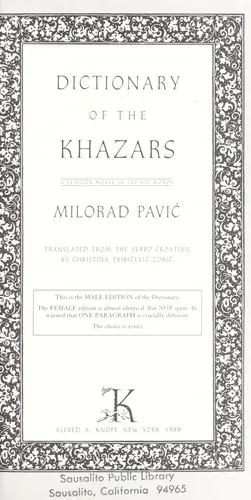
Pavić’s international cult classic is a novel disguised as three competing lexicons—Christian, Islamic, and Hebrew—about a vanished people and an enigmatic religious debate. Entries contradict one another, characters migrate between accounts, and cross-references become secret passageways. You do not simply follow the book; you investigate it.
That architecture makes it perhaps the closest modern relative of Potocki’s masterpiece. Both novels treat knowledge as a maze built from unreliable testimony, legends, dreams, theology, scholarship, and jokes. Pavić also shares Potocki’s gift for making impossible things feel learned rather than whimsical: his dream hunters and occult manuscripts arrive with the authority of footnotes. Few novels so completely reward curiosity, suspicion, and rereading.
An English traveler enters fifteenth-century Cairo and finds himself trapped in an atmosphere where dreams, impostures, stories, and waking life cannot be cleanly separated. Robert Irwin—also a distinguished scholar of Arabic literature—uses his learning mischievously, turning historical detail into the solid floor from which the novel repeatedly pulls the carpet.
Like Potocki, Irwin can make metaphysical bewilderment frightening and extremely funny at once. The book proceeds through interruptions, embedded narratives, false awakenings, and grotesque encounters, while every apparent explanation produces a stranger question. This is not a decorative imitation of old tale collections but a brilliant inquiry into why stories possess us. Its cult reputation is deserved: for readers susceptible to its peculiar spell, it becomes one of those books they cannot believe others have missed.
Ninety-two-year-old Marian Leatherby is given a hearing trumpet and discovers that her family intends to send her away. From that dryly comic beginning, Carrington creates a world governed by occult hints, eccentric institutions, rebellious old women, and a logic that is simultaneously absurd and exact.
A major Surrealist artist as well as a writer, Carrington shares Potocki’s refusal to choose between rational satire and supernatural revelation. Both make solemn systems ridiculous without dismissing mystery itself; both understand that esoteric lore becomes most seductive when accompanied by appetite, mischief, and social comedy. Yet Carrington’s fierce, elderly heroine gives the enchantment an energy entirely her own. Long cherished as a cult classic, The Hearing Trumpet is short enough to devour and strange enough to alter permanently what you think a novel is allowed to do.