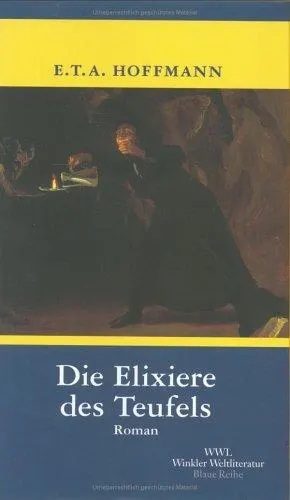
Books like The Devil's Elixirs
You loved Hoffmann’s ability to make sin, madness, coincidence, and supernatural persecution feel like different masks worn by the same force. These three novels offer similarly treacherous pleasures while taking his art in distinct directions.
If you liked The Devil's Elixirs, you’ll love these
Not lookalikes — kindred books. Each one shares something essential with The Devil's Elixirs, and we tell you exactly what.
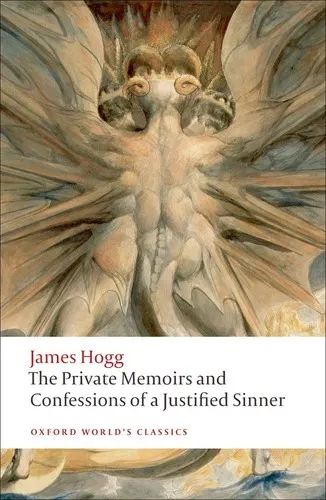
This is the closest thing to a spiritual twin of The Devil’s Elixirs. A young zealot, convinced that divine election places him beyond ordinary morality, encounters the insinuating Gil-Martin—companion, tempter, possible double—and gradually loses command of both his actions and his story.
Hogg gives us incompatible versions of events: an outward chronicle and the sinner’s own fevered confession. That structure creates the same delicious uncertainty Hoffmann cultivates around Medardus: possession or self-deception, supernatural double or disowned appetite? Yet Hogg’s savage comedy and assault on religious certainty are entirely his own. Long neglected and now recognized as a masterpiece of Scottish fiction, it is one of the rare Gothic novels as intellectually destabilizing as it is frightening.
If Hoffmann’s careening narrative—its embedded histories, improbable meetings, repetitions, and sudden reversals—was part of the enchantment, Potocki offers an even grander labyrinth. A young officer crossing the Sierra Morena takes shelter at a deserted inn and falls into a chain of seductions, apparitions, conspiracies, philosophical disputes, and stories nested inside other stories.
The marvel is not merely the complexity but the perpetual uncertainty about what kind of book you are reading. A supernatural terror may acquire a rational explanation, only for that explanation to become another trap; solemn mysteries turn comic, then erotic, then metaphysical. This singular monument of European fiction makes narrative itself feel like an intoxicant—one whose effects the reader notices only after escape has become impossible.
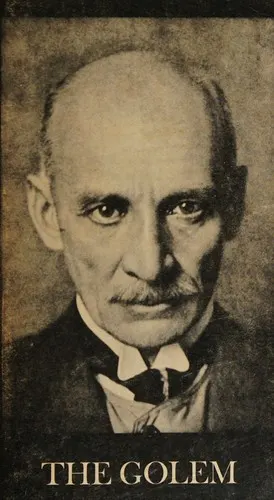
Meyrink transforms Hoffmann’s crisis of identity into a waking dream. A nameless narrator puts on another man’s hat and seems to enter the life of Athanasius Pernath, a gem-cutter in Prague’s old Jewish quarter, where rooms, objects, memories, and people possess an alarming tendency to exchange meanings.
Rather than explaining its mysteries, The Golem tightens them into symbols: a sealed room, a pack of tarot cards, a face glimpsed where no face should be. Its Prague is less a setting than a psychic organism, at once squalid, comic, erotic, and spiritually charged. A sensational success on its 1915 publication and Meyrink’s enduring masterpiece, it carries Hoffmann’s divided selves and occult dread into modernist dream logic. Few novels make disorientation feel so purposeful—or so strangely beautiful.