
Books like The Pilgrim's Progress
Begin with Kafka’s The Castle, a world away from Bunyan’s confident Christianity yet uncannily close to his sense that a human life is a journey whose every obstacle may carry spiritual meaning. The other two recommendations recover Bunyan’s fiercer hope: transformation through surrender, and grace working through a compromised pilgrim.
If you liked The Pilgrim's Progress, you’ll love these
Not lookalikes — kindred books. Each one shares something essential with The Pilgrim's Progress, and we tell you exactly what.

K. arrives in a snowbound village seeking recognition from the inaccessible Castle above it. Like Christian, he enters a landscape where geography becomes moral and metaphysical argument: messengers mislead, authorities remain elusive, and every conversation feels like both a practical obstruction and a judgment on the soul.
Kafka replaces Bunyan’s named allegorical figures with inscrutable officials and villagers, but he creates the same charged uncertainty about how one should read the world. Is K. being tested, excluded, or simply crushed by meaningless procedure? Few twentieth-century novels have generated such enduring interpretation or exerted such influence. Reading it after Bunyan reveals the terrifying shadow cast by pilgrimage when assurance of salvation disappears.

Mr. Vane inherits an old house whose mysterious librarian, Mr. Raven, opens the way into another reality. What follows is not merely fantasy adventure but a visionary confrontation with pride, possession, repentance, death, and rebirth. MacDonald gives spiritual states physical form as boldly as Bunyan does, yet his dream imagery is stranger, darker, and more sensuous.
The kinship lies especially in MacDonald’s insistence that genuine freedom requires surrender of the self that demands to rule. His Christianity is less doctrinally tidy than Bunyan’s, but no less urgent. C. S. Lewis called MacDonald his master, and Lilith shows why: it is one of the foundational works of modern Christian fantasy, a book whose unsettling images can remain active in the imagination for years.
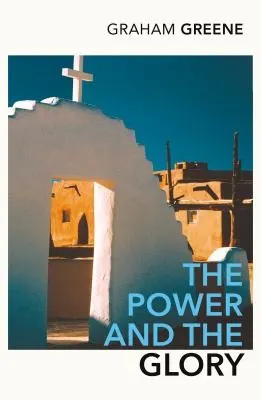
Greene’s fugitive “whisky priest” is almost an anti-Christian: frightened, compromised, and painfully aware of his failures. Hunted through a Mexican state where the Church has been outlawed, he must decide repeatedly what his vocation still demands of him. Greene makes temptation and spiritual danger as immediate as Bunyan’s Slough of Despond or Vanity Fair, but locates them inside one flawed conscience rather than among personified enemies.
This is a great novel of grace precisely because it refuses a spotless hero. Its taut pursuit plot gives Bunyan’s moral urgency a modern psychological force, while Greene’s hard, lucid prose prevents suffering from becoming pious decoration. Long regarded as one of his masterpieces, it offers a vision Bunyan’s readers will recognize and may find newly moving: holiness does not begin when weakness ends.