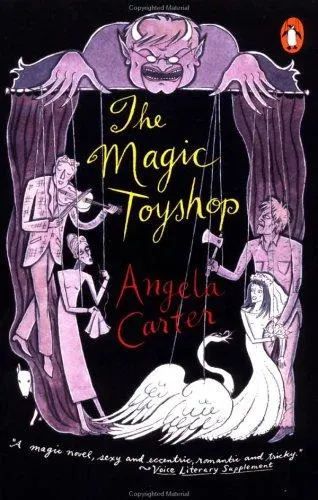
Books like The Magic Toyshop
—because Carter’s real enchantment lies in making domestic life feel at once sensuous, theatrical, and dangerously unreal. These three novels likewise turn confinement into strange art, while giving their heroines very different routes through the nightmare.
If you liked The Magic Toyshop, you’ll love these
Not lookalikes — kindred books. Each one shares something essential with The Magic Toyshop, and we tell you exactly what.

Comyns begins with a young woman trapped in the London household of her brutal veterinary-surgeon father, then lets the uncanny seep into her life as quietly as damp through a wall. Like Carter, she understands that a tyrant’s home is a private mythology: animals, bodies, rooms, and household objects all become charged with fear.
Yet Comyns’s style is startlingly different—plain, innocent-seeming, and deadpan where Carter is lush. That simplicity makes every grotesque detail more piercing. Long admired by writers including Graham Greene and preserved as a cult classic, The Vet’s Daughter is brief enough to devour in an evening and haunting enough to remain for years.

If you loved Melanie’s dawning awareness that men can turn women into dolls, roles, and possessions, Rhys’s masterpiece is essential. Its heroine grows up amid beauty so intense that it already seems feverish: orchids, heat, ruined estates, family secrets, and threats half understood. Gradually, the novel reveals how identity can be overwritten by someone with the power to rename and narrate you.
Rhys’s prose has Carter’s sensuous immediacy but replaces her baroque wit with fractured, dreamlike sorrow. Winner of the WH Smith Literary Award and now regarded as a landmark of twentieth-century fiction, Wide Sargasso Sea does something rare: it makes lushness itself feel perilous. Every gorgeous sentence tightens the enclosure.
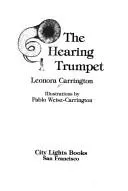
Carrington offers the exhilarating comic counterspell to Uncle Philip’s puppet theatre. Ninety-two-year-old Marian Leatherby is nearly deaf, magnificently unmanageable, and dispatched by her family to an institution whose architecture and rituals become increasingly bizarre. From that opening, the novel expands with utter confidence into occult pageantry, feminist revolt, and apocalyptic transformation.
A beloved cult classic by one of Surrealism’s great artists, The Hearing Trumpet shares Carter’s refusal to distinguish neatly between fairy tale, nightmare, joke, and liberation. But where The Magic Toyshop follows a girl awakening inside a man’s fantasy, Carrington gives an old woman the freedom to outlive—and joyfully explode—the fantasies imposed on her. Missing it means missing one of fiction’s wildest acts of imaginative disobedience.