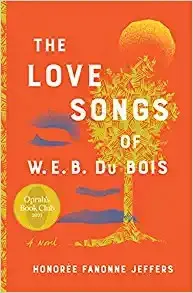
Books like The Love Songs of W.E.B. Du Bois
You responded to Jeffers’s fusion of ancestral history, intimate damage, intellectual force, and lyrical storytelling. These three novels pursue that same essential question—how the past inhabits a life—through strikingly different forms.
If you liked The Love Songs of W.E.B. Du Bois, you’ll love these
Not lookalikes — kindred books. Each one shares something essential with The Love Songs of W.E.B. Du Bois, and we tell you exactly what.
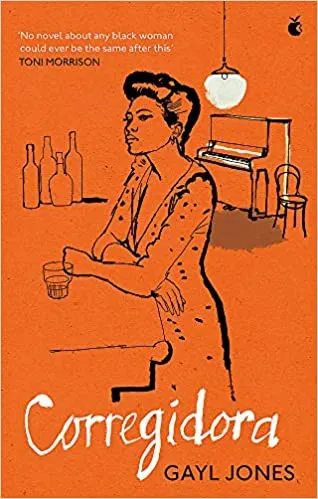
Jeffers’s novel shows history surviving not only in records and stories but in the body; Corregidora takes that idea to its fiercest extreme. Ursa, a blues singer, has been raised to preserve the testimony of foremothers enslaved and sexually exploited by a Brazilian landowner. After a devastating injury, she must confront what it means when her identity, sexuality, and purpose have all been shaped by the demand to remember.
Jones writes in a compressed, incantatory style whose repetitions work like blues phrases—circling pain until each return changes its meaning. Toni Morrison championed and edited the novel, and its influence on later Black fiction is immense. Where Jeffers builds a vast genealogical architecture, Jones creates a short, scorching chamber of echoes. Few novels examine inherited trauma, desire, and historical witness with such uncompromising power.
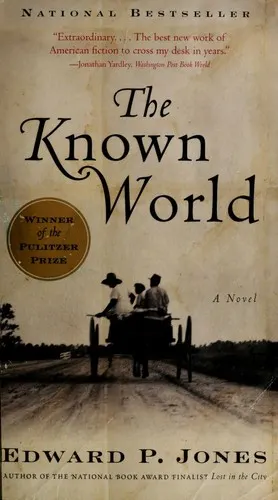
If you loved Jeffers’s ability to make genealogy feel like a living social universe, enter Edward P. Jones’s fictional Manchester County, Virginia. The novel opens around the death of Henry Townsend, a formerly enslaved Black man who became an enslaver himself, then expands outward through relatives, captives, officials, neighbors, and descendants. Jones refuses simple moral diagrams without ever blurring the brutality of slavery.
His narrator moves freely across decades, quietly revealing the future consequences of an apparently minor life; the result is an uncanny sense that every person possesses a history beyond the page. Like Jeffers, Jones restores density and individuality to people whom official history reduces to categories. Winner of the Pulitzer Prize and now widely regarded as a modern American masterpiece, The Known World offers the rare pleasure of a novel that seems to contain an entire society—and the moral vision to see everyone in it.
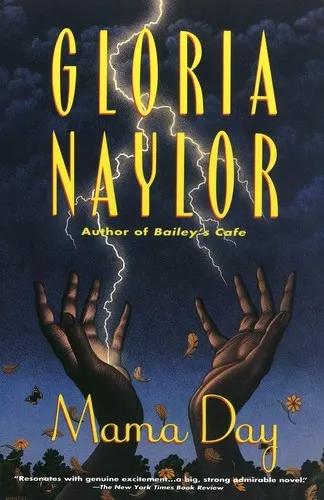
Mama Day is the choice for the reader who cherished the ancestral, spiritual, and matriarchal currents running beneath Ailey’s story. On Willow Springs, an island belonging to its Black inhabitants rather than to any state, the formidable Miranda ‘Mama’ Day tends a community shaped by family legend, folk knowledge, buried grief, and a history outsiders cannot fully interpret. Her grandniece Cocoa, meanwhile, is building an adult life in New York and falling in love with a man whose rational habits leave little room for Willow Springs’ truths.
Naylor lets competing voices speak across geography and across different ways of knowing. The romance is warm and sharply observed, but the novel’s deepest subject is the authority carried by women, land, ritual, and communal memory. Naylor was already a National Book Award winner when she published it, and Mama Day has inspired unusually devoted readers ever since. It is sensuous, funny, ominous, and formally inventive—a novel that makes ancestry feel less like background than an active presence in the room.