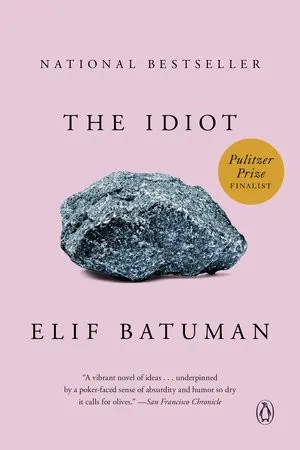
Books like The Idiot
In all three, a fiercely intelligent mind turns ordinary life under a bright lamp, discovering that language clarifies everything except what one should actually do.
If you liked The Idiot, you’ll love these
Not lookalikes — kindred books. Each one shares something essential with The Idiot, and we tell you exactly what.

Like Batuman, Wang makes intellectual precision collide hilariously with emotional uncertainty. Her unnamed chemistry graduate student can explain reactions more readily than commitment, family obligation, or why her apparently successful life feels unlivable. The clipped, crystalline sentences turn academic anxiety into deadpan comedy without diminishing its pain.
Winner of the PEN/Hemingway Award, Chemistry is slimmer and more compressed than The Idiot, but it offers the same addictive pleasure: watching a brilliant woman reason impeccably around the questions that matter most.
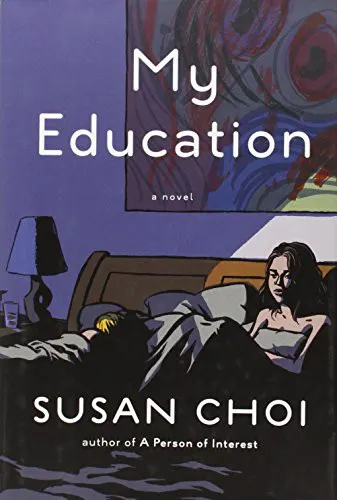
Choi understands the campus not merely as a setting but as an atmosphere—dense with interpretation, vanity, erotic projection, and the conviction that experience can be mastered by thinking harder. Graduate student Regina arrives already fascinated by a notoriously charismatic professor, then discovers that desire has its own syllabus.
The prose is lush where Batuman’s is dry, and the emotional temperature is far higher. Yet both novels are superb about the distance between being intellectually sophisticated and knowing what is happening to you. My Education gives that gap the force of a great, consuming love story.
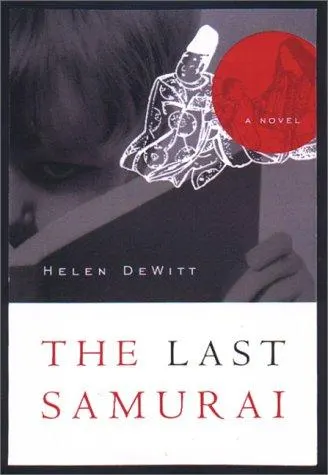
For readers who loved how The Idiot treats languages, books, and ideas as urgent parts of living, DeWitt’s cult classic is indispensable. Its central pair—a formidably learned single mother and her precocious son—move through Greek, mathematics, films, and improvised systems of education with comic velocity. Erudition here is never decoration: it is shelter, weaponry, play, and a way of searching for a life large enough to inhabit.
Long neglected and now passionately championed, The Last Samurai has inspired unusual devotion because almost nothing else thinks so exuberantly on the page. It is stranger and more formally audacious than Batuman’s novel, but shares its rare faith that intelligence itself can be dramatic.