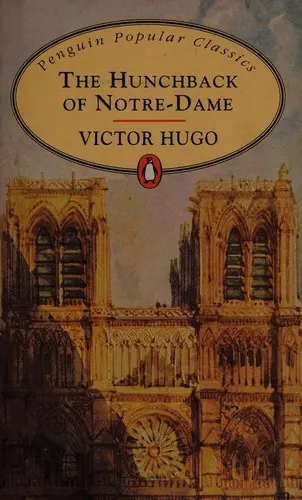
Books like The Hunchback of Notre-Dame
Reading Victor Hugo’s cathedral-haunted tragedy feels like being swept through a vast stone labyrinth where comedy, horror, scholarship, and pity echo from the same walls. These three novels share that grandeur without merely reproducing its scenery.
If you liked The Hunchback of Notre-Dame, you’ll love these
Not lookalikes — kindred books. Each one shares something essential with The Hunchback of Notre-Dame, and we tell you exactly what.
Gormenghast Castle dominates this novel as completely as Notre-Dame dominates Hugo’s: not as a backdrop, but as an ancient organism whose stones, ceremonies, and hidden passages shape everyone inside it. Peake fills the castle with grotesques who initially seem like caricatures, then reveals their loneliness, vanity, hunger, and capacity for suffering.
His lush, shadow-heavy prose makes rooms and faces almost unnervingly tangible, while the young kitchen boy Steerpike brings dangerous ambition into Gormenghast’s rigid order. The result is funny, macabre, compassionate, and magnificently strange. The opening volume of Peake’s revered Gormenghast sequence, Titus Groan is one of the rare novels whose architecture and inhabitants achieve the force of myth.
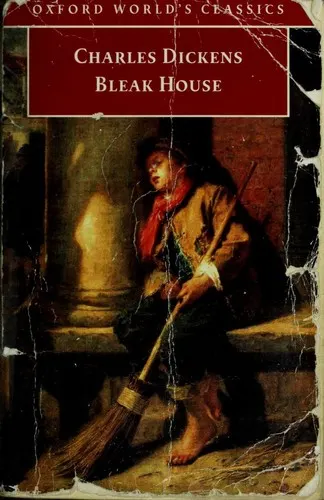
If you loved Hugo’s ability to embrace an entire city—from the powerful to the despised—Bleak House offers a similarly panoramic act of imagination. Dickens moves between a young woman’s intimate narration and a colder, sweeping voice that watches London’s fog seep through streets, drawing rooms, slums, and the interminable Court of Chancery.
Like Hugo, Dickens combines melodrama, satire, social fury, startling coincidences, and fierce tenderness toward people whom respectable society prefers not to see. Its enormous cast never feels merely decorative: each comic eccentricity belongs to a web of dependence and neglect. Often judged among Dickens’s supreme achievements, Bleak House turns institutional cruelty into something atmospheric—and makes compassion feel like the only light capable of penetrating it.
This is Hugo returning to one of his deepest subjects: the violence committed when society turns a marked body into a public spectacle. Gwynplaine, disfigured in childhood so that his face resembles a permanent grin, finds refuge with the wandering philosopher Ursus and the blind Dea. From that beginning Hugo builds a world of theatrical display, exclusion, desire, and rank.
The novel has the same audacious mixture of the grotesque and the sublime that makes Quasimodo unforgettable, but its political anger is even sharper. Hugo’s digressions, storms of rhetoric, and emotional extremity demand surrender rather than restraint; in return, they produce images that lodge permanently in the imagination. Gwynplaine’s famous visual legacy reaches as far as the design of the Joker, yet the novel itself is richer and sadder than that influence suggests: an impassioned defense of human dignity from a writer incapable of feeling anything on a small scale.