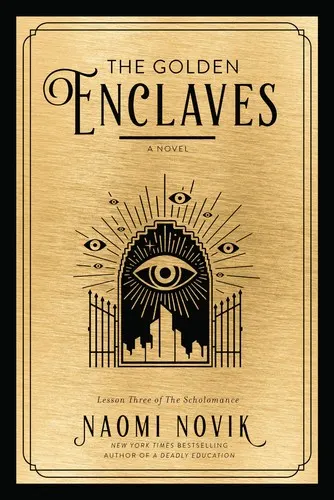
Books like The Golden Enclaves
It feels like sprinting behind a catastrophically powerful, magnificently furious heroine as she discovers that killing monsters is simpler than confronting the machinery that creates them. The exhilaration comes from El’s voice and magic, but the lasting charge comes from watching her insist—against every incentive—that survival must mean saving other people too.
If you liked The Golden Enclaves, you’ll love these
Not lookalikes — kindred books. Each one shares something essential with The Golden Enclaves, and we tell you exactly what.
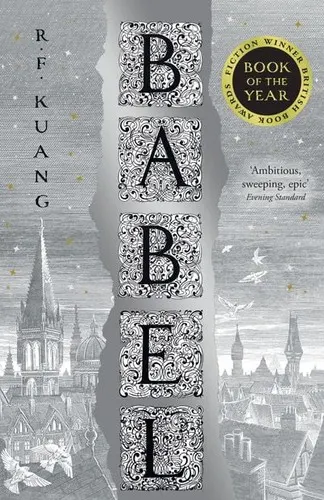
Like The Golden Enclaves, Babel turns magic into political economy: every dazzling enchantment depends upon labor, extraction, and carefully concealed suffering. Robin Swift enters Oxford’s prestigious translation institute enchanted by its intellectual riches, only to discover how thoroughly scholarship and empire sustain each other.
Kuang makes complicity painfully intimate. Friendships fracture under unequal risks; comfort becomes morally incriminating; and brilliant young people must decide whether a corrupt institution can be reformed by those it rewards. A major bestseller and winner of the British Book Award for Fiction, Babel has become a touchstone of modern dark academia. Read it for the same fierce pleasure of seeing magical rules become an indictment—and idealistic students realize that understanding the system obliges them to act.
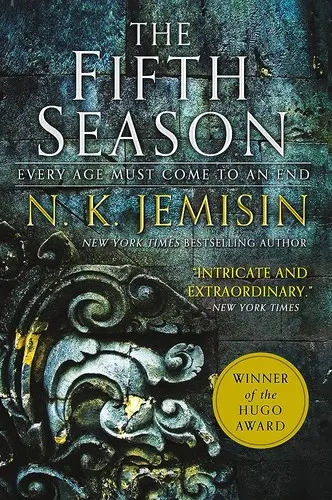
If El’s anger delighted you because it is both weapon and ethical intelligence, meet Essun. She lives in a continent repeatedly broken by geological catastrophe, where people with the power to control the earth are feared, exploited, and brutally trained. Jemisin’s world-building never sits decoratively in the background: disaster management, prejudice, education, and magic lock together into one merciless social machine.
The prose is daring, the emotional pressure enormous, and the revelations alter how you understand what you have already read. The Fifth Season began the only trilogy whose every volume won the Hugo Award for Best Novel, an unprecedented achievement earned through ambition rather than mere scale. It offers the same intoxicating combination of apocalyptic power and moral fury, while asking an even harsher question: what does anyone owe a world built to use them?
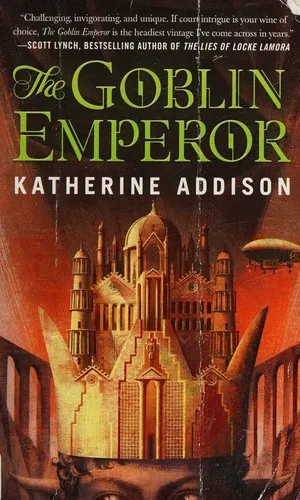
This is the quieter, warmer counterpart to The Golden Enclaves—and an unusually satisfying match for its deepest conviction. Maia, an unwanted and isolated imperial son, abruptly inherits a court designed around intimidation, inherited privilege, and lethal etiquette. He possesses almost no preparation for rule; what he does possess is firsthand knowledge of cruelty.
Where El challenges a monstrous system with annihilating magic, Maia tests whether persistent decency can itself become a form of structural rebellion. Addison makes council meetings, appointments, and tiny acts of attention feel genuinely consequential, because each choice determines what kind of institution will replace the old one. A Hugo finalist with an exceptionally devoted readership, The Goblin Emperor is beloved as a comfort novel without ever being naïve: its hope is persuasive precisely because kindness here requires discipline, courage, and political skill.