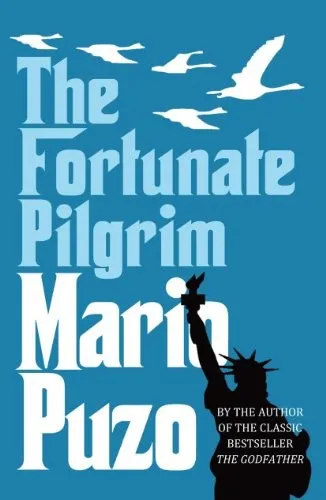
Books like The Fortunate Pilgrim
—because Lucia Santa’s greatness lies not in grand gestures but in the sheer force with which she holds a family together, the best companions are novels that treat immigrant survival, domestic labor, and divided loyalties with the same hard-earned dignity.
If you liked The Fortunate Pilgrim, you’ll love these
Not lookalikes — kindred books. Each one shares something essential with The Fortunate Pilgrim, and we tell you exactly what.
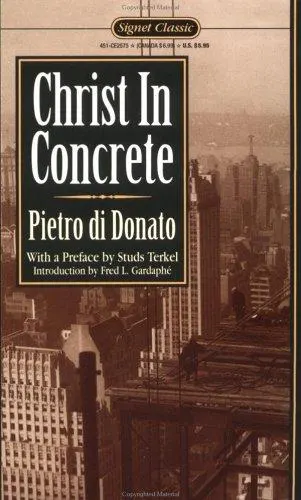
Di Donato takes the working world surrounding Puzo’s family saga—the immigrant labor usually left outside the parlor—and makes it fierce, lyrical, and immediate. Geremio, an Italian bricklayer, supports his family through work whose danger is evident from the devastating opening pages; faith, exploitation, comradeship, and hunger are inseparable.
Where Puzo’s prose accumulates power through family life, Di Donato writes in compressed, almost biblical bursts, capturing the speech and physical rhythms of men building a country that barely acknowledges them. Acclaimed on its 1939 publication and now a landmark of Italian-American literature, this is the raw underside of Lucia Santa’s struggle: short, unforgettable, and far too powerful to remain a specialist’s classic.
If Lucia Santa is the character you cannot stop thinking about, read Umbertina. Barolini follows several generations of Italian-American women, beginning with a formidable Calabrian immigrant whose endurance becomes both an inheritance and a challenge for her descendants. She understands that survival is not merely inspirational: it can nourish a family, constrain it, and leave later generations unsure how to honor sacrifices they no longer fully comprehend.
The novel widens Puzo’s central question—what does immigration cost inside the home?—across decades and through women’s voices too often pushed to the edge of traditional family sagas. Long recognized as a foundational Italian-American feminist novel, Umbertina gives the immigrant matriarch the historical scale she deserves. It feels less like an imitation of Puzo than the indispensable other half of the story.
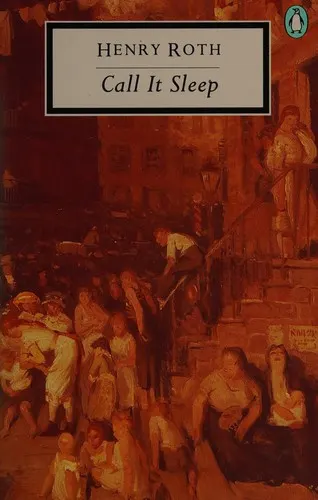
Roth’s modernist classic enters the immigrant tenement through a child’s frightened, intensely receptive mind. Young David Schearl grows up among Yiddish-speaking families on New York’s Lower East Side, negotiating an intimidating father, a beloved mother, crowded streets, religious mystery, and an English-speaking world that seems thrilling and dangerous at once.
A lover of The Fortunate Pilgrim will recognize the household as a whole civilization: language, shame, money, parental authority, and old-country memory press upon every ordinary moment. But Roth renders that pressure with extraordinary sonic invention, letting languages collide until the city itself seems to speak. Neglected after its 1934 publication and triumphantly rediscovered three decades later, Call It Sleep earned its reputation as one of the great American immigrant novels. Missing it means missing one of the form’s boldest achievements.