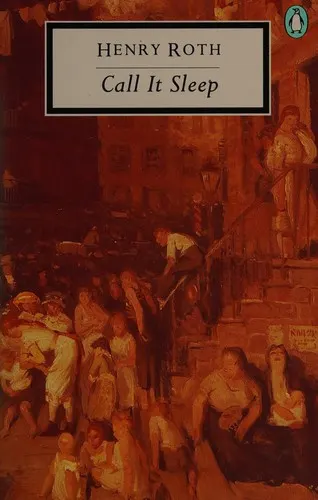
Books like Call It Sleep
Readers enthralled by Call It Sleep tend to crave fiction in which a frightened young consciousness turns ordinary streets, family quarrels, and religious language into something immense—half nightmare, half revelation. These novels share that transforming intensity.
If you liked Call It Sleep, you’ll love these
Not lookalikes — kindred books. Each one shares something essential with Call It Sleep, and we tell you exactly what.
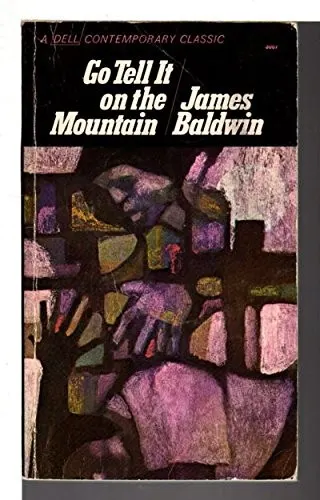
Baldwin’s first novel has the same spiritual voltage as Roth’s: scripture is not decoration but a language through which a boy understands terror, desire, guilt, and the dangerous authority of his father. On his fourteenth birthday, John Grimes enters his family’s Harlem church carrying fears he can barely name; Baldwin makes the service feel at once bodily, psychological, and apocalyptic.
Like Roth, Baldwin can move from a child’s constricted viewpoint into a family’s buried history without losing emotional pressure. The voices preach, accuse, remember, and sing against one another. Now firmly regarded as one of the great American debuts, it offers the rare combination Call It Sleep achieves: modernist inwardness with the force of communal speech.
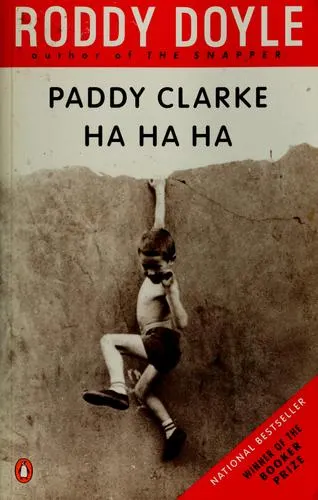
Doyle builds this Booker Prize–winning novel out of a ten-year-old Dublin boy’s boasts, games, scraps, cruelties, misunderstandings, and sudden intuitions. There is no adult narrator translating childhood into tasteful retrospect. Paddy’s short, darting observations must carry everything, and the reader gradually becomes exquisitely alert to what he notices without comprehending.
That is the profound kinship with Roth: childhood is not innocence but incomplete knowledge under pressure. Doyle’s vernacular is funnier and more stripped-down than Roth’s, yet it produces a similar ache as playground exuberance and domestic vigilance occupy the same mind. Few novels make a child’s syntax reveal so much that the child himself cannot say.
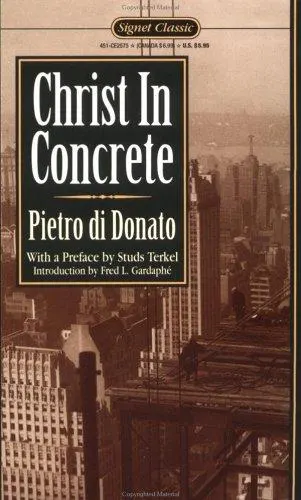
If Roth’s mingling of immigrant speech, bodily danger, and biblical imagery is what seized you, di Donato’s 1939 novel is indispensable. Its opening follows Geremio, an Italian American bricklayer, into labor so punishing that concrete, steel, hunger, and prayer seem fused. The prose is rough, ecstatic, and deliberately strange: workers’ idioms rise into lamentation and epic.
Long cherished as a classic of American working-class fiction, Christ in Concrete refuses to observe poverty politely from outside. It makes economic power physically felt—in muscle, noise, exhaustion, and family fear—while granting its characters the grandeur of religious art. It is a short novel with a monumental sound, and one of the closest counterparts to Roth’s ability to make the language of the street blaze like scripture.