Books like Umbertina
Inheritance. Umbertina endures because women’s labor, memory, and thwarted ambitions travel across generations, changing shape without losing their force. These novels make that inheritance equally vivid.
If you liked Umbertina, you’ll love these
Not lookalikes — kindred books. Each one shares something essential with Umbertina, and we tell you exactly what.
For the intimate, female-centered counterpart to Umbertina’s historical sweep, read this touchstone of Italian American literature. In Chicago’s Little Italy, young Carmolina listens to her grandmother Doria’s stories while trying to understand the griefs and silences within her family.
De Rosa writes in fragments—sensuous, dreamlike, thick with dialect, food, Catholic imagery, and remembered streets. What Barolini develops across generations, Paper Fish compresses into the charged bond between grandmother and granddaughter. It understands that family history survives not as orderly fact but as gesture, superstition, recipe, and half-told story. Long cherished by readers and scholars of Italian American women’s writing, it is the kind of neglected classic that makes its neglect seem astonishing.
Vita begins with two children arriving in New York from southern Italy in 1903, carrying little beyond hunger, nerve, and extravagant hopes. Mazzucco drew on her own family history, but refuses to polish immigration into an uplifting legend: tenements, dangerous work, exploitation, desire, and reinvention all retain their abrasive reality.
A reader moved by Umbertina’s relentless will—and by the cost hidden inside later generations’ prosperity—will recognize the moral weight of this novel. Mazzucco combines archival investigation with a novelist’s imaginative daring, asking what can truly be recovered from the lives of obscure ancestors. Winner of Italy’s Premio Strega, Vita is both a major migration novel and a passionate act of restitution.
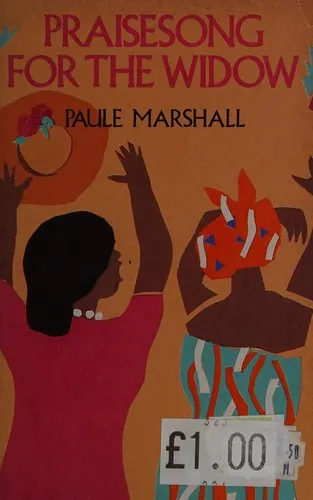
Avey Johnson appears to have achieved everything her forebears were denied: money, respectability, and security. Yet during a Caribbean cruise, an inexplicable unease drives her away from the carefully managed life she has built. From that opening rupture, Marshall explores what advancement can cost when it requires a woman to mute inherited memory.
The kinship with Umbertina lies deeper than immigrant history. Both novels treat ancestry as a living pressure within women’s bodies and choices; both ask whether success without continuity is another kind of loss. Marshall’s prose moves between psychological precision and ceremonial rhythm, giving ordinary recollection the force of revelation. An American Book Award winner, Praisesong for the Widow is a compact, luminous novel that can permanently alter how one thinks about inheritance.