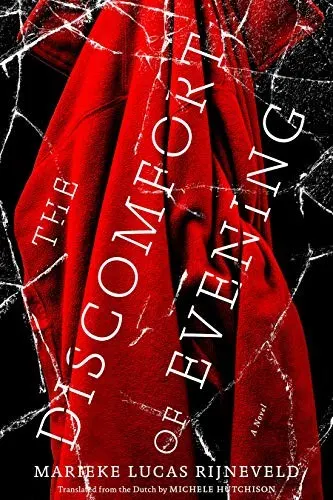
Books like The Discomfort of Evening
What happens when grief is forbidden a language and the body must speak it instead? These novels share Rijneveld’s gift for turning childhood fear, religious shame, desire, and physical revulsion into something fiercely poetic.
If you liked The Discomfort of Evening, you’ll love these
Not lookalikes — kindred books. Each one shares something essential with The Discomfort of Evening, and we tell you exactly what.
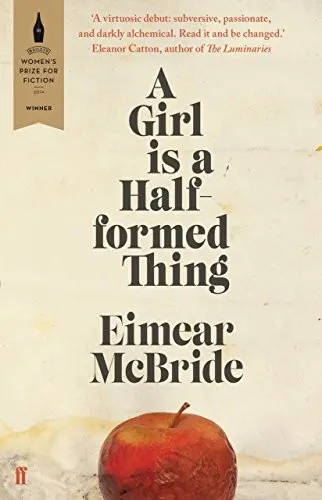
McBride places you inside an unnamed girl’s consciousness as she grows up in an Irish Catholic family overshadowed by her brother’s brain tumour. Her fractured syntax does not merely describe thought: it catches thought before it becomes orderly, leaving fear, tenderness, lust, and shame painfully exposed.
Like Rijneveld, McBride understands that children absorb adult silence through their bodies. Faith offers vocabulary but little consolation; love becomes inseparable from damage. Winner of the inaugural Goldsmiths Prize and the Baileys Women’s Prize, this was immediately recognized as a genuine formal breakthrough. Its language can feel bruising, but once you acquire its rhythm, few novels achieve such devastating intimacy.
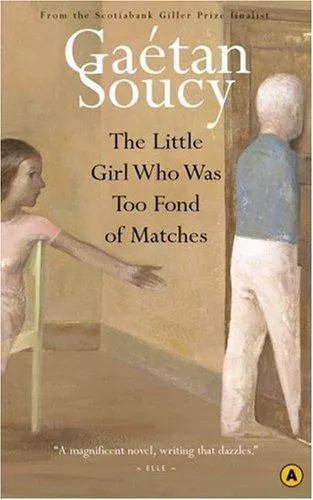
Two siblings have been raised in near-total isolation by a tyrannical father, with old books, private rituals, and inherited commandments standing in for the world. When that sealed existence suddenly breaks open, the narrator attempts to record what follows in language at once archaic, ingenious, and profoundly unreliable.
The kinship with Rijneveld lies in the terrifying resourcefulness of the child mind. Cruelty is normalized, theology mutates into superstition, and words conceal realities the narrator cannot yet comprehend. Soucy’s Quebec Gothic novel has earned a devoted international readership because its linguistic strangeness is not ornamental: every odd phrase reveals the shape captivity has given a consciousness. It is short, ferocious, and almost impossible to shake.
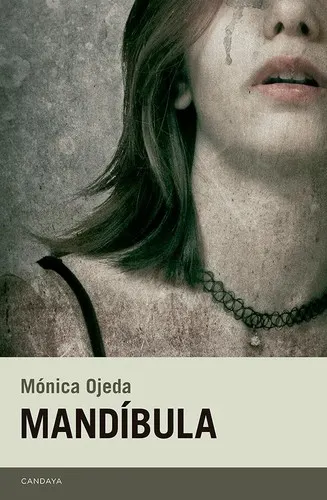
Ojeda begins with an abduction, then draws us into the feverish world of girls at an elite Catholic school: invented mythologies, horror stories, dangerous games, obsessive friendships, and a teacher whose own fears make her vulnerable to theirs. The prose moves between intellectual precision and raw panic, probing why terror can be intimate, seductive, even sacred.
Readers drawn to Rijneveld’s fusion of religious imagery, bodily disgust, and forbidden desire will recognize the same refusal to sanitize adolescence. Yet Jawbone has its own electric register, shaped by internet horror and the volatile power of girls creating a language adults cannot control. A finalist for the National Book Award in Sarah Booker’s translation, it is one of the most arresting contemporary Gothic novels—wildly intelligent and genuinely unnerving.