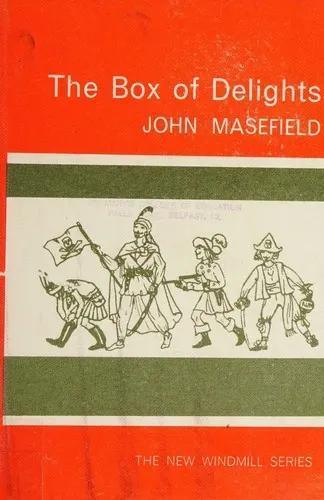
Books like The Box of Delights
You responded to Masefield’s rare mixture of winter radiance, genuine menace, comic extravagance and magic that seems older than the story itself. These three novels preserve that enchantment without merely repeating its scenery.
If you liked The Box of Delights, you’ll love these
Not lookalikes — kindred books. Each one shares something essential with The Box of Delights, and we tell you exactly what.
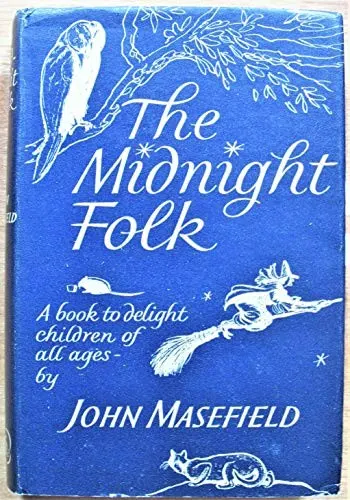
Begin with Masefield’s earlier novel about Kay Harker. Here Kay’s pursuit of a long-lost treasure draws him into a nocturnal world of talking animals, witches, conspirators and sudden transformations. It supplies some of the roots of The Box of Delights, yet it is stranger, more secretive and less ceremonially wintry.
What truly carries over is Masefield’s incomparable dream logic: nursery comfort can turn dangerous in a sentence, animals possess complete social lives, and the impossible is narrated with cheerful certainty. Often overshadowed by its sequel, The Midnight Folk is not preparatory reading but a classic enchantment in its own right—the other half of Kay’s magical life.
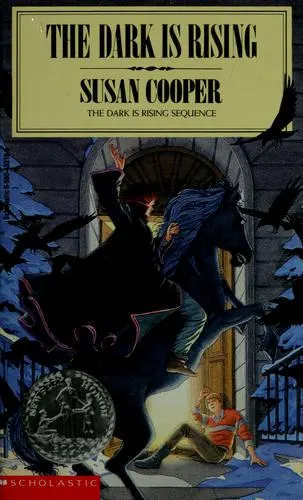
Susan Cooper understands, as Masefield did, that midwinter can feel like a threshold rather than a season. On his eleventh birthday, Will Stanton begins to perceive ancient powers beneath the familiar lanes, farms and households around him. Snow, music, firelight and gathering darkness acquire an almost sacramental intensity.
A Newbery Honor book and the defining volume of Cooper’s celebrated sequence, it matches Masefield’s ability to make cosmic conflict intimate. Its evil is chilling because it presses against domestic warmth; its magic feels discovered, not invented. If the grave, numinous passages of The Box of Delights stayed with you longest, The Dark Is Rising is essential.
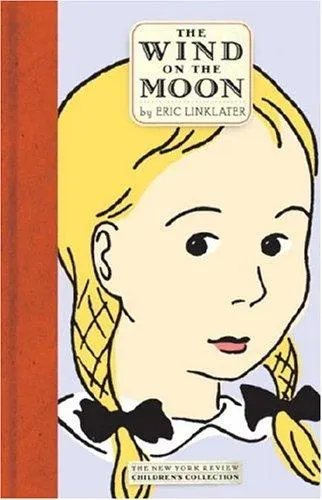
For the wilder, funnier side of Masefield, choose Eric Linklater’s Carnegie Medal–winning fantasy. When an ill-tempered wind blows, sisters Dinah and Dorinda find good behaviour increasingly difficult, and the world around them becomes gloriously unstable. Linklater treats transformations, pompous adults and escalating absurdity with a straight face that makes everything funnier.
Yet the book has backbone: beneath its exuberance lie courage, loyalty and a sharp hatred of tyranny. Like The Box of Delights, it can move from cosy comedy to danger without losing its buoyancy. Its devotees cherish precisely that unruly amplitude—the sense that a children’s novel may contain jokes, terror, tenderness and marvels without tidying any of them away.