Books like The Backrooms
Thresholds. The Backrooms makes crossing into the wrong place feel like crossing out of ordinary reality altogether. These novels likewise turn disorientation, uncertainty, and incomplete knowledge into unusually potent forms of dread.
If you liked The Backrooms, you’ll love these
Not lookalikes — kindred books. Each one shares something essential with The Backrooms, and we tell you exactly what.
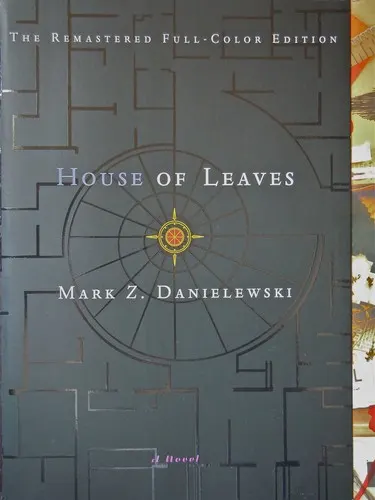
A young family discovers that its new house is larger inside than outside. That simple impossibility expands into a maze of documents, footnotes, competing voices, and typographical traps: the reader does not merely observe the characters’ disorientation but physically experiences it on the page.
Now a cult landmark of experimental horror, House of Leaves captures the Backrooms’ most compelling idea—that empty space can possess a hostile logic—while adding emotional and intellectual depth. Its impossible corridors are frightening, but so is the human compulsion to map, interpret, and master them. Few novels make getting lost feel this intimate.
Two housemates find an impossible network of rooms beneath their home: spaces that shift, repeat, and seem to obey rules just beyond comprehension. Reed is especially good at the practical texture of exploration—the improvised maps, tested hypotheses, and mounting realization that curiosity has become dependence.
Its form makes the uncanniness even sharper: each printed copy is algorithmically varied, so no two readers encounter precisely the same text. That is not a decorative trick; it gives every copy the unsettling quality of a private transmission from an unstable place. For someone drawn to the Backrooms as both environment and participatory myth, Subcutanean is almost uncannily well suited.
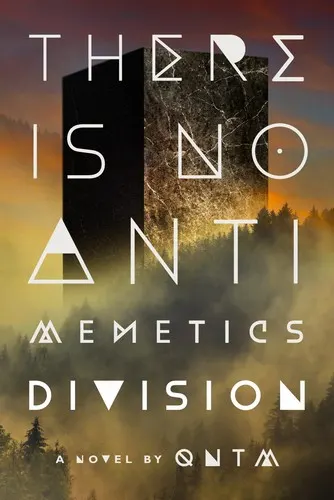
What if the danger is not merely difficult to understand, but actively prevents you from remembering it? qntm’s novel follows an organization attempting to contain entities and ideas that erase evidence of themselves from the human mind. Its personnel work through protocols, damaged records, and gaps in their own knowledge, never certain whether ignorance means safety or defeat.
Born from the collaborative SCP tradition, the book shares the Backrooms’ internet-native pleasure in cryptic reports, unstable lore, and rules assembled around the unknowable. Yet qntm turns that mythology into a gripping, remarkably coherent novel. It is a cult favorite because its central conceit keeps producing new terrors: every missing answer may itself be evidence of the thing hunting you.