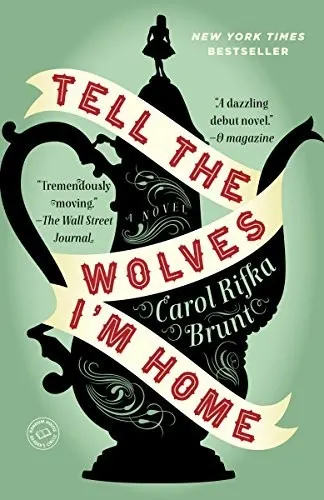
Books like Tell The Wolves I'm Home
Karen Joy Fowler’s We Are All Completely Beside Ourselves begins as an eccentric college confession, yet it reaches the same painful territory as Brunt’s novel: a family rearranged by absence, a sisterhood knotted with love and blame, and a narrator slowly finding words for what everyone avoids. The three books below understand that grief is rarely pure; jealousy, secrecy, anger, and tenderness arrive with it.
If you liked Tell The Wolves I'm Home, you’ll love these
Not lookalikes — kindred books. Each one shares something essential with Tell The Wolves I'm Home, and we tell you exactly what.
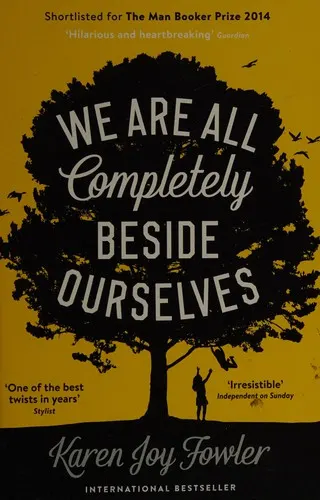
Rosemary has learned to keep quiet about her family: her sister vanished when they were children, and her brother later became a fugitive. She begins her story in the middle, circling the past with the funny, defensive intelligence of someone who knows that memory can protect and betray us at once.
Readers who loved June and Greta’s volatile bond will recognize Fowler’s refusal to make sisterly love simple. Affection coexists with rivalry, guilt, and the childish wish to be the one who is chosen. Like Brunt, Fowler also lets a young woman’s distinctive voice gradually expose the failures of the adults around her without reducing those adults to villains. Winner of the PEN/Faulkner Award and shortlisted for the Booker Prize, it is ingenious in construction—but its real achievement is the emotional reckoning concealed inside that ingenuity.
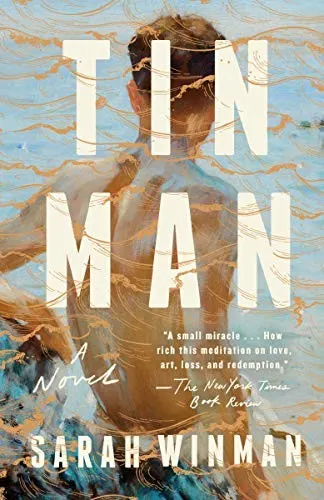
Ellis and Michael grow up inseparable; then Annie enters their lives, and the shape of their intimacy changes. Art—beginning with a reproduction of Van Gogh’s sunflowers—becomes a private language for beauty, possibility, and everything these characters cannot comfortably say.
That makes Tin Man especially close to Tell the Wolves I’m Home. Both novels understand how a painting can hold an entire relationship, how queer love may survive in fragments and omissions, and how bereavement makes the past feel more vivid than the room one is standing in. Winman writes with extraordinary compression: a bicycle ride, a shared meal, or a remembered summer carries the force of a declaration. This slender, intensely tender novel leaves an emotional wake far larger than its size.
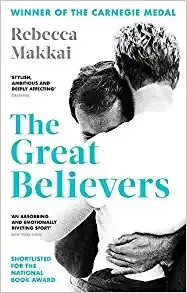
In 1985 Chicago, Yale Tishman watches AIDS consume his circle of friends while he pursues a cache of valuable artwork for a new gallery. Decades later, his friend Fiona searches for her estranged daughter in Paris. From those opening strands, Makkai builds a capacious novel about who is permitted to mourn, who becomes a caretaker, and what survival costs.
The shared AIDS-era setting is only the beginning of its kinship with Brunt’s novel. The Great Believers is equally alert to grief’s less presentable companions: resentment toward the dead, possessiveness among the living, survivor’s guilt, and the terrible inadequacy of trying to save someone. Fiona, like June, discovers that loving a person does not mean fully knowing them. A Pulitzer finalist and winner of the Carnegie Medal, Makkai’s novel has the sweep of social history but the intimacy of a whispered confidence. It is one of the essential novels about how private love endures a public catastrophe.