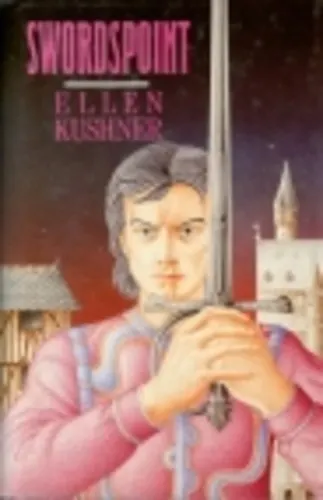
Books like Swordspoint
You relish elegance with a knife behind its back: polished conversation as combat, desire entangled with danger, and a society whose exquisite manners merely refine its cruelty.
If you liked Swordspoint, you’ll love these
Not lookalikes — kindred books. Each one shares something essential with Swordspoint, and we tell you exactly what.
Kushner’s return to Riverside is not an afterthought but a Locus Award-winning expansion of everything Swordspoint does brilliantly. Katherine Talbert is summoned by her scandalous uncle, the Duke of Tremontaine, who offers to rescue her family from debt—provided she trains as a swordsman rather than making a respectable marriage.
Through Katherine, Kushner tests who may wield violence, who must depend upon it, and how power changes when a woman learns the city’s most masculine art. Familiar figures acquire new dimensions, while the dialogue remains poised between flirtation and bloodshed. If Swordspoint left you unwilling to abandon Riverside’s drawing rooms and alleys, this is the indispensable return.
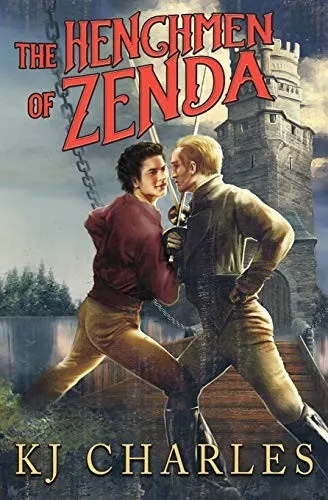
Imagine a swashbuckler in which the supposed villains are more intelligent, more attractive, and far more entertaining than the heroes. KJ Charles retells The Prisoner of Zenda through Jasper Detchard, a sardonic English mercenary hired for a Ruritanian conspiracy—and immediately fascinated by the lethally competent Rupert von Hentzau.
Charles shares Kushner’s understanding that swordplay can be conversation, courtship, and character revelation at once. Jasper’s dry narration strips aristocratic romance of its pieties without sacrificing excitement; beneath the wit lies a clear-eyed interest in loyalty between people who make no claim to virtue. Short, fast, queer, and wickedly pleasurable, it is the rare homage that makes the classic adventure beneath it seem tame.
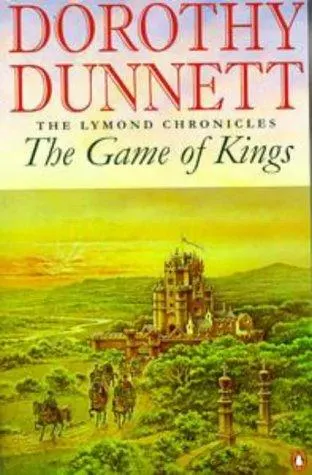
For the reader who loved Swordspoint’s verbal duels as much as its physical ones, Dorothy Dunnett offers a magnificent escalation. In sixteenth-century Scotland, the outlawed Francis Crawford of Lymond returns amid war and political fracture, surrounded by accusations of treason and commanding a disreputable band with unnerving flair.
Lymond is one of historical fiction’s great dangerous intelligences: theatrical, cruel, funny, cultivated, and almost impossible to read correctly. Dunnett makes every banquet, raid, quotation, and insult part of a strategic contest, demanding attention and rewarding it lavishly. The novel’s density can initially feel like entering a fencing match already in progress, but that difficulty helped create its fiercely devoted readership. Once its design becomes visible, an entire six-book obsession is waiting.