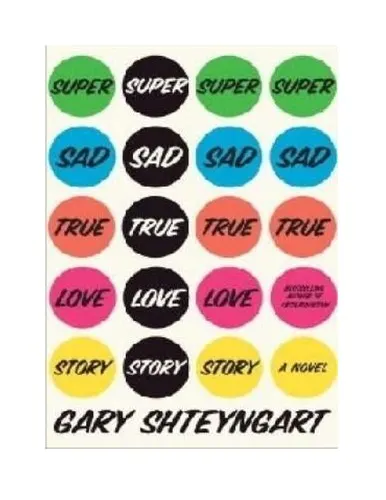
Books like Super Sad True Love Story
The gadgets may date; the humiliation does not: Shteyngart’s people turn themselves into rankings, purchases, and performances while still begging—messily, sincerely—to be loved.
If you liked Super Sad True Love Story, you’ll love these
Not lookalikes — kindred books. Each one shares something essential with Super Sad True Love Story, and we tell you exactly what.
Lockwood writes the internet not as a topic but as a state of consciousness: jokes, outrage, slogans, and collective hallucinations arrive at the speed of a scrolling feed. Her sentences have the same lethal comic compression as Shteyngart’s best inventions, exposing how willingly we let platforms colonize our language and feelings.
Then, without renouncing its comedy, the novel discovers what online irony cannot contain. That collision between terminal cleverness and undefended tenderness is precisely what makes Super Sad True Love Story hurt. A Booker Prize finalist adored for capturing life inside the feed, Lockwood’s novel is one of the few serious works about the internet that already feels indispensable.
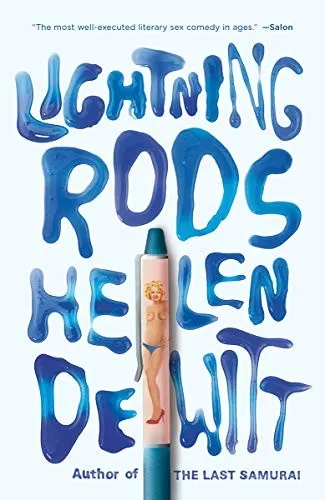
A failed salesman devises a grotesque workplace solution and, through persistence, euphemism, and impeccable business logic, turns it into a thriving enterprise. DeWitt’s great trick is to narrate this escalating absurdity in the frictionless language of management culture, until exploitation sounds like innovation and moral surrender like professional growth.
Where Shteyngart uses credit scores and consumer rankings, DeWitt uses corporate problem-solving to show capitalism manufacturing the desires it claims merely to serve. The result is unnervingly plausible, structurally brilliant, and extremely funny. Once neglected and now firmly established as a cult classic, Lightning Rods is the rare satire whose premise grows more disturbing the more rationally everyone behaves.
Egan shares Shteyngart’s fascination with people who know they are becoming obsolete and cannot joke their way out of wanting connection. Her musicians, executives, assistants, and drifters keep trying to convert experience into image, status, or saleable information, while time quietly dismantles every identity they construct.
The novel’s shifting voices and audacious forms—including a celebrated chapter told through presentation slides—never feel like display for its own sake. Each formal gamble asks how technology changes memory, attention, and intimacy. Winner of both the Pulitzer Prize and the National Book Critics Circle Award, Goon Squad earns its stature by being formally daring without sacrificing emotional generosity: beneath its satire lies the same devastating conviction that compromised, ridiculous people remain worthy of love.