
Books like Serious Men
What if intelligence is less a virtue than a weapon—something the excluded can counterfeit, the powerful can hoard, and institutions can pretend to recognize? These three novels share Serious Men’s delight in exposing prestige, merit, and social respectability as unstable performances.
If you liked Serious Men, you’ll love these
Not lookalikes — kindred books. Each one shares something essential with Serious Men, and we tell you exactly what.

Balram Halwai narrates his rise from village poverty with the same dangerous combination of wounded pride, opportunism, and analytical brilliance that makes Ayyan Mani so compelling. He understands India’s hierarchy from below—not as an abstract injustice, but as a machinery of accents, uniforms, rooms, favors, and humiliations—and his voice turns that understanding into leverage.
Winner of the Booker Prize, The White Tiger is often called a satire, but that undersells its unsettling intimacy. Adiga makes Balram funny enough to seduce you and ruthless enough to implicate you. If you loved how Serious Men refuses to separate social grievance from vanity, or intelligence from deceit, this is indispensable.
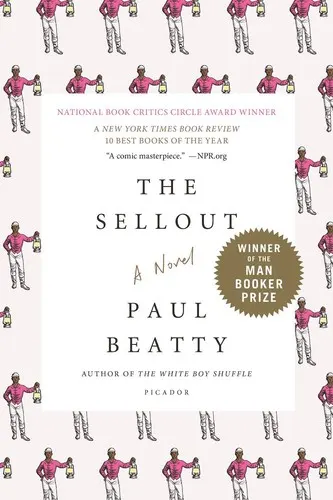
Paul Beatty’s Booker-winning novel offers the closest match for Manu Joseph’s sheer satirical nerve. Its narrator, a Black man from a neglected corner of Los Angeles, responds to civic erasure with an escalating experiment so outrageous that the book opens with him before the US Supreme Court.
The pleasure lies in Beatty’s velocity: jokes mutate into arguments, arguments into provocations, and provocations into painfully exact observations about race, status, language, and who gets to define progress. Like Joseph, Beatty distrusts every respectable position available. The Sellout is wilder and more verbally explosive than Serious Men, but it produces the same exhilarating uncertainty: you laugh, then realize the joke has removed the moral ground beneath you.
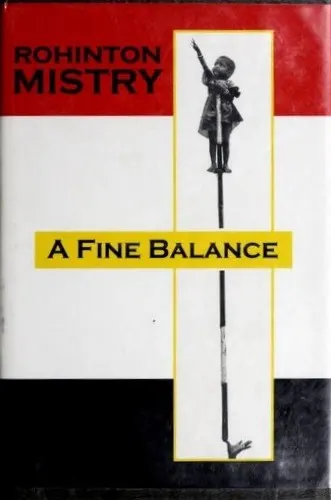
This is the least obviously comic recommendation—and perhaps the most important. Rohinton Mistry’s celebrated novel gathers four people of sharply different backgrounds in 1970s India and watches caste, bureaucracy, money, and chance press upon their fragile efforts to build tolerable lives.
Where Joseph uses acid wit and strategic deception, Mistry uses patient accumulation: a minor indignity becomes a constraint, a constraint becomes a trap, and private kindness becomes a form of resistance. Yet the kinship is deep. Both novelists understand that institutions enter the body and the home; both refuse comforting simplifications about victims, ambition, or virtue. A Fine Balance has inspired unusually fierce devotion because its characters become difficult to leave behind. After Serious Men’s brilliant cynicism, it supplies the emotional reckoning that cynicism postpones.