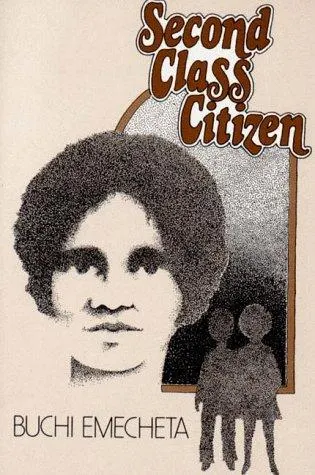
Books like Second Class Citizen
Nervous Conditions is the cooler blade, dissecting how a girl learns to resist; Stay with Me is the tightening knot, showing a marriage deformed by expectations no couple can satisfy. Between them sits The Joys of Motherhood, Emecheta’s devastating enlargement of the questions that animate Second Class Citizen: what does a woman owe others, and what may she claim for herself?
If you liked Second Class Citizen, you’ll love these
Not lookalikes — kindred books. Each one shares something essential with Second Class Citizen, and we tell you exactly what.
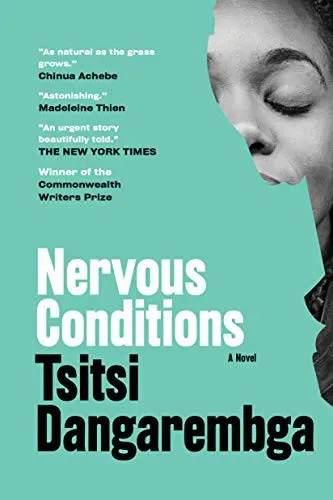
Tambu’s startling opening declaration immediately establishes a narrator as candid, intelligent and unwilling to perform the emotions expected of her. Like Adah, she sees education not simply as advancement but as an escape route—and gradually recognizes that escape can carry its own forms of captivity.
Dangarembga writes with Emecheta’s gift for exposing injustice through domestic detail rather than sermons. Meals, school fees and family obligations become instruments of power; victories remain complicated by who paid for them. Winner of the Commonwealth Writers’ Prize for the Africa region, Nervous Conditions became a foundational novel of African women’s writing because its anger is matched by extraordinary psychological precision.

At the novel’s outset, Yejide’s husband’s family arrives with a second wife: after four childless years, private sorrow has become public property. Adébáyọ̀ builds from that intrusion an intimate, compulsively readable study of marriage, fertility and the terrible ingenuity people develop under social pressure.
A reader who admired Emecheta’s refusal to romanticize motherhood will recognize the kinship immediately. Yet Stay with Me is no imitation: alternating voices turn marital certainty into unstable ground, while sharp humor keeps the book from becoming merely bleak. Its Baileys Prize shortlisting helped announce Adébáyọ̀ as a major novelist; the novel earns that reputation by making every revelation deepen, rather than simplify, its characters.
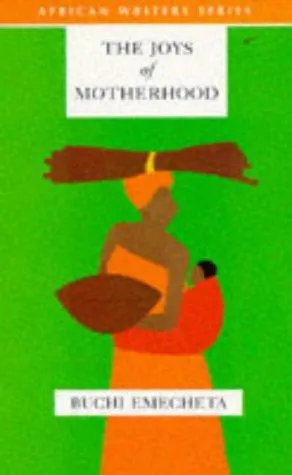
Second Class Citizen shows one woman fighting to become the author of her own life; The Joys of Motherhood asks why a woman’s life should require such a fight in the first place. Nnu Ego has been taught that children will confer value, security and fulfillment. Emecheta then examines that promise with fierce irony, tracing the arithmetic of care: who sacrifices, who receives praise and whose labor disappears into family survival.
Often regarded as Emecheta’s masterpiece, the novel expands her characteristic plainspoken force into a broad social tragedy without losing intimacy. Its title becomes more searching with every chapter. Anyone moved by Adah’s endurance should not miss Emecheta’s most powerful reckoning with the ideals used to measure women—and to consume them.