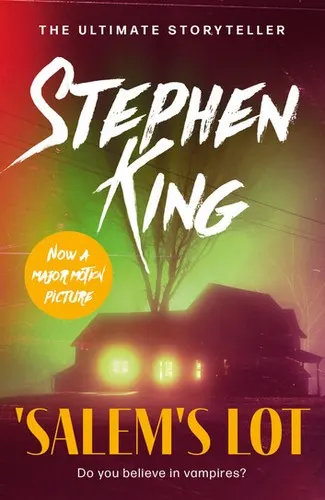
Books like 'Salem's Lot
Ghost Story matches the dark, cumulative grandeur of ’Salem’s Lot; The Auctioneer distills its vision of a community surrendering house by house. Alongside The Ceremonies, these novels understand that the most frightening monster is one that exploits weaknesses already present.
If you liked 'Salem's Lot, you’ll love these
Not lookalikes — kindred books. Each one shares something essential with 'Salem's Lot, and we tell you exactly what.
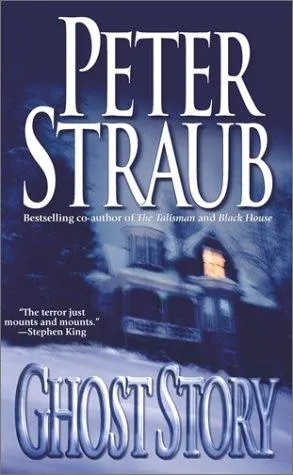
Four elderly men in a small New York town meet to tell one another frightening stories, while an old secret begins exerting pressure on the present. Straub builds horror as King does in ’Salem’s Lot: through an ensemble of fully inhabited lives, ominous fragments, and the gradual realization that seemingly isolated disturbances form one vast design.
Straub’s landmark novel is more labyrinthine and dreamlike than King’s, but it has the same patience, seriousness, and appetite for escalation. Its evil is terrifying not merely because it kills, but because it knows people intimately—their guilt, vanity, grief, and capacity for denial. Few horror novels make a whole town feel so vulnerable, or reward slow reading with such an overwhelming convergence.
A charismatic auctioneer arrives in a poor New Hampshire farming community and begins requesting donated goods for ostensibly public purposes. Each demand seems small enough to tolerate. That is the trap.
This lean, ferociously controlled novel contains no conventional vampire, yet it captures the deepest terror of ’Salem’s Lot: watching a community lose the ability to resist. Samson shows neighbors accommodating the intolerable, institutions becoming instruments of coercion, and ordinary decency buckling by increments. Long cherished as a neglected classic and revived by NYRB Classics, it turns civic politeness into a mechanism of nightmare. Once its pressure begins rising, the book is almost impossible to put down.
Jeremy Freirs, a graduate student researching Gothic literature, rents a room on an isolated New Jersey farm owned by the devout Poroth family. His quiet summer of reading soon acquires a disquieting undertow: peculiar natural events, old beliefs, and hints of something whose plans extend far beyond any single household.
Klein shares King’s gift for letting ancient evil infiltrate an exact, recognizable modern world. The novel proceeds deliberately, making weather, insects, scripture, and casual conversation feel charged with hidden purpose; its erudition deepens the fear instead of smothering it. Klein published only this one novel, but its cult reputation among serious horror readers has endured for decades. If you loved the sense in ’Salem’s Lot that evil was patiently arranging the entire board, The Ceremonies is essential.