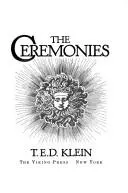
Books like The Ceremonies
How much of ordinary life is only a veil, maintained by customs whose purpose we have forgotten? These three novels share Klein’s patience, metaphysical seriousness, and conviction that knowledge can be a form of exposure.
If you liked The Ceremonies, you’ll love these
Not lookalikes — kindred books. Each one shares something essential with The Ceremonies, and we tell you exactly what.
Years after a disastrous occult experiment, three friends remain haunted by something Harrison refuses to reduce to a tidy monster or mythology. Their damaged adult lives become the negative image of an inaccessible realm glimpsed through symbols, half-remembered rituals, and unreliable scholarship.
Like Klein, Harrison understands that suggestion becomes more frightening when intellectually precise: every esoteric reference seems meaningful, yet interpretation only deepens the danger. His cool, compressed prose also gives the supernatural an almost unbearable melancholy. Now a cult classic of English weird fiction, The Course of the Heart is what to read when you want occult horror that leaves a permanent metaphysical ache.
Sarah Crowe, a grieving novelist renting an isolated Rhode Island house, discovers an unfinished manuscript about the immense red oak behind it. Her journal, the manuscript, local history, and increasingly unstable perception begin to contaminate one another.
The crucial kinship with The Ceremonies is not the rural menace but the way texts become dangerous instruments. Research does not clarify the world; it gives the incomprehensible a route into the researcher’s mind. Kiernan’s fiercely intelligent narrator makes every contradiction matter, while the novel preserves the possibility that its horror is psychological, supernatural, or older than either category. Its World Fantasy Award nomination helped confirm what devoted weird-fiction readers already knew: this is one of Kiernan’s essential novels.
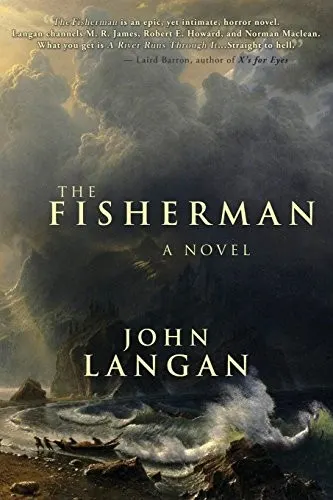
Two widowers find companionship in fishing, then hear about a secluded creek with a disturbing history. From that modest beginning, Langan opens a story within the story, expanding private grief into a vision of cosmic forces without losing the human scale.
A reader who admired Klein’s enormous patience will appreciate how deliberately Langan lays each stone: regional lore, physical detail, theological speculation, and emotional loss accumulate until the impossible feels not merely plausible but inevitable. The Bram Stoker Award–winning novel has become a modern cosmic-horror favorite because its mythology is vivid while remaining genuinely uncanny. It delivers the rare pleasure of watching an ordinary landscape acquire terrifying depth.