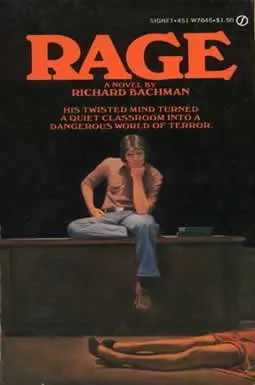
Books like Rage
Rage and Robert Cormier’s The Chocolate War share the same unnerving conviction that a school’s ordinary routines merely disguise systems of coercion, resentment, and fear. These three novels capture King’s moral claustrophobia, volatile young characters, and refusal to offer reassuring explanations for violence.
If you liked Rage, you’ll love these
Not lookalikes — kindred books. Each one shares something essential with Rage, and we tell you exactly what.
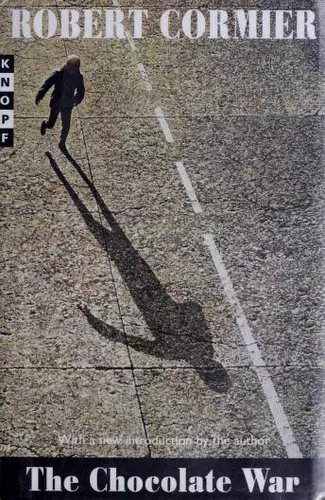
At a Catholic boys’ school, Jerry Renault quietly refuses to participate in the annual chocolate sale—and discovers that saying no can threaten an entire hierarchy. Cormier turns classrooms, corridors, and football fields into arenas of psychological combat, while Archie Costello, the school’s brilliant student manipulator, rivals Charlie Decker in his ability to locate another person’s hidden weakness.
Like Rage, this is a lean, confrontational novel about rebellion becoming contagious and authority protecting itself. It also shares King’s bleak fascination with spectators: people who recognize cruelty, dislike it, and nevertheless help it happen. Published in 1974, The Chocolate War helped prove that fiction for teenagers could be morally uncompromising; its honesty has kept it both fiercely challenged and fiercely loved. Its final chill is not easily forgotten.
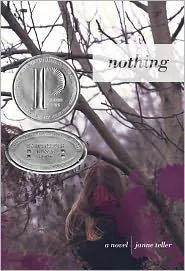
When Pierre Anthon announces that nothing matters, leaves school, and takes up residence in a plum tree, his classmates decide to prove him wrong. Their project begins with adolescent certainty and acquires its own ruthless logic.
What connects Nothing to Rage is not simply youthful rebellion but the frightening chemistry of a group liberated from adult rules. Teller understands how shame, argument, peer pressure, and the desire to be taken seriously can turn children into a collective more dangerous than any single outcast. Her prose is stark and fable-like, making every escalation feel horribly inevitable. This Danish prizewinner became an internationally controversial modern classic because it asks large philosophical questions without making them safe for the classroom.
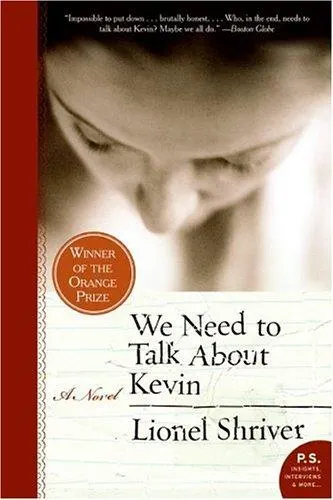
Lionel Shriver approaches school violence from the aftermath. In letters to her absent husband, Eva examines her relationship with their son Kevin, searching his childhood—and her own ambivalence about motherhood—for an explanation of the atrocity he eventually committed.
A reader gripped by Rage’s refusal to reduce Charlie Decker to a diagnosis will find the same dangerous ambiguity here. Is Kevin innately monstrous, carefully performing monstrosity, or being reconstructed by a mother who needs her memories to mean something? Shriver gives both mother and son formidable intelligence, so their conflict becomes a duel over who controls the story. Winner of the Orange Prize, the novel has earned its reputation as one of the most disturbing studies of culpability, charisma, and parental dread in contemporary fiction.