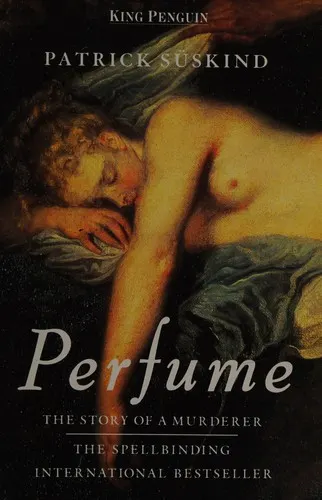
Books like Perfume
…because the real seduction of Perfume lies not in murder or eighteenth-century France, but in the impossible elegance with which Süskind makes monstrosity beautiful, funny, and appallingly intimate. These three novels perform comparable feats without merely retracing his plot.
If you liked Perfume, you’ll love these
Not lookalikes — kindred books. Each one shares something essential with Perfume, and we tell you exactly what.
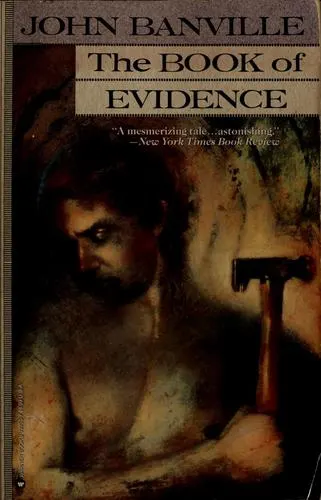
Freddie Montgomery, an idle, cultivated drifter, recounts the events that have brought him into custody. His intelligence and aesthetic sensitivity should make him sympathetic; instead, they become instruments of evasion. Like Grenouille, he is fascinating precisely because his refined perceptions coexist with a terrifying absence of ordinary fellow-feeling.
Banville’s sentences are sumptuous, exact, and perpetually suspect: beauty gilds every confession while reminding you that language can falsify as brilliantly as it reveals. Shortlisted for the Booker Prize, The Book of Evidence is one of the great modern novels of the self-justifying criminal mind. If Perfume made you enjoy being trapped inside an elegant monster’s consciousness, this is indispensable.
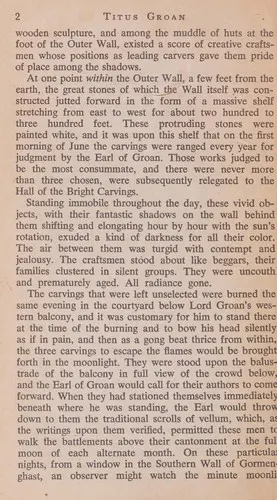
Gormenghast is less a castle than a decaying organism, dense with dust, stone, shadow, ritual, and generations of accumulated absurdity. Into its rigid hierarchy comes Steerpike, a kitchen boy whose ambition is matched by his gift for reading—and exploiting—other people.
Peake was also an illustrator, and he writes as if carving every face and corridor in ink. His characters are grotesques without becoming cartoons; his comedy is extravagant, yet menace seeps through it. Widely regarded as a masterpiece of twentieth-century imaginative fiction, Titus Groan offers the same rare pleasure as Perfume: entering a fully physical world whose beauty, rot, cruelty, and absurdity cannot be separated.
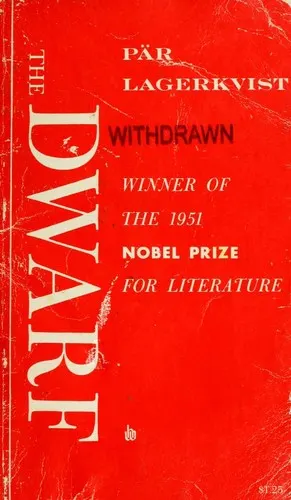
A court dwarf records his contempt for nearly everyone around him: lovers, artists, servants, rulers, and humanity itself. He is lucid, observant, malicious—and convinced that hatred gives him a clearer view of the world than other people possess.
Lagerkvist strips away Süskind’s luxuriance but preserves the chill of a dark European fable. The dwarf’s voice is so compressed and unwavering that the novel feels like a poisoned aphorism expanding in the mind. Lagerkvist later received the Nobel Prize in Literature, and this fierce little classic shows why: it turns one monstrous consciousness into an inquiry about the appetite for violence hidden inside civilization. It is brief enough to read in an evening and difficult to forget for years.