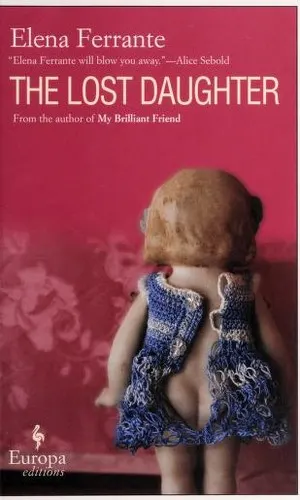
Books like The Lost Daughter
Sheila Heti turns maternal ambivalence into a philosophical cross-examination; Penelope Mortimer makes it feel like a beautifully controlled nervous breakdown. Miranda July, meanwhile, finds the unruly comedy in the same forbidden hunger for a life not wholly consumed by being someone’s mother.
If you liked The Lost Daughter, you’ll love these
Not lookalikes — kindred books. Each one shares something essential with The Lost Daughter, and we tell you exactly what.
A woman approaching forty tries to decide whether to have a child, testing every desire and objection until the question implicates her art, her partner, her mother, and her idea of freedom. Heti’s novel is cerebral where Ferrante’s is visceral, but both refuse the comforting fiction that women possess some stable, authentic maternal instinct beneath social pressure.
Its divination games, compressed arguments, and startling admissions make thought itself suspenseful. Few novels have examined reproductive choice with such candor or provoked such passionate recognition among readers. If Leda’s unsanctioned honesty was what held you, Heti’s relentless self-interrogation is indispensable.
Mortimer’s unnamed narrator has children, a prosperous husband, and a life whose conventional abundance is becoming psychologically unlivable. Her voice is the attraction: dry, intelligent, wounded, and capable of observing her own collapse with terrifying precision.
Like Ferrante, Mortimer understands that domestic unhappiness is not simple victimhood. Love, resentment, appetite, dependence, and self-deception remain tangled together. Reclaimed as a modern classic by New York Review Books—and famously adapted by Harold Pinter—this short novel has the force of a secret that stayed buried for decades. Its final emotional pressure is extraordinary.
A middle-aged artist, wife, and mother sets off on a cross-country drive, ostensibly seeking a change of scene. Almost immediately, her plans begin bending toward impulses she cannot explain away. July approaches female restlessness through audacity and deadpan comedy, making desire seem at once ridiculous, disruptive, and existentially necessary.
A National Book Award finalist, All Fours became a genuine word-of-mouth phenomenon because it gives unruly bodily and imaginative life to feelings usually domesticated into euphemism. Its heroine is no model of good behavior, and the book never asks her to be one. Readers who prized Ferrante’s willingness to let a mother become strange—even to herself—will find this exhilarating.