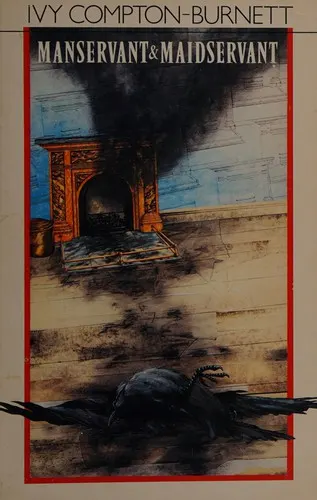
Books like Manservant and Maidservant
A closed room, impeccable manners, and a few carefully chosen words that draw blood: these novels preserve Compton-Burnett’s delicious sense that ordinary conversation is warfare conducted without raising one’s voice.
If you liked Manservant and Maidservant, you’ll love these
Not lookalikes — kindred books. Each one shares something essential with Manservant and Maidservant, and we tell you exactly what.
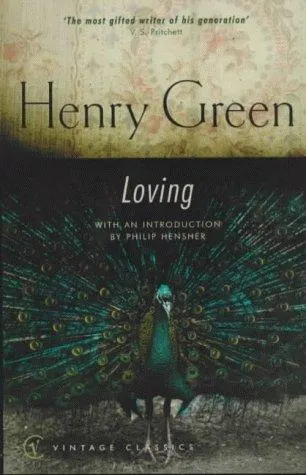
In an Irish country house during the Second World War, the servants continue their intricate private lives while the family above them remains largely insulated from history. The resemblance in setting matters less than Green’s dazzling understanding of hierarchy: every confidence creates leverage, every romance disturbs the chain of command, and gossip moves through the house like currency.
Like Compton-Burnett, Green makes speech reveal what speakers are trying hardest to conceal. His dialogue is stranger, more lyrical and less formally polished, but equally alive to evasion, appetite and petty tyranny. Long regarded by writers and critics as Green’s masterpiece, Loving is one of the great English novels of domestic power—and its comedy becomes more treacherous with every page.
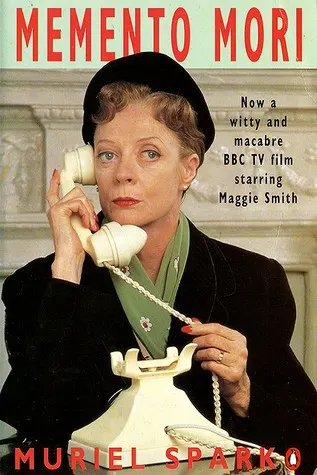
An elderly woman answers the telephone and hears a stranger say, “Remember you must die.” Soon others in her circle receive the same message. Spark treats this premise not as a conventional mystery but as a reagent dropped into a volatile social world: old resentments sharpen, alliances shift, and supposedly private weaknesses become public instruments.
A reader who relished Compton-Burnett’s refusal to sentimentalize age, family or dependence will recognize the exhilaration here. Spark’s people remain vain, acquisitive and strategically eloquent even at the edge of mortality; nobody is excused merely for being vulnerable. Memento Mori is among her most admired novels because its savage economy never excludes compassion. It is funny enough to make cruelty pleasurable, then exact enough to make the laughter catch.
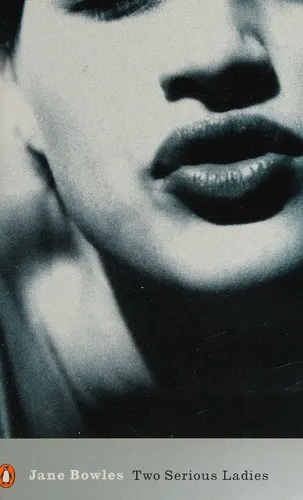
Jane Bowles’s only novel introduces Christina Goering and Frieda Copperfield, two affluent women whose ideas about virtue, freedom and experience lead them away from ordinary social behavior. What follows has the unnerving logic of a dream recounted in perfectly lucid sentences.
The kinship with Compton-Burnett lies above all in the dialogue. Bowles’s characters speak with grave precision while pursuing impulses that are selfish, obscure or wildly disproportionate; polite exchanges become contests of domination, and emotional dependence takes forms no conventional realist would predict. Yet Bowles is looser and more surreal, pushing the comedy of social coercion toward existential strangeness. Two Serious Ladies has earned an unusually devoted cult around its singularity: there is scarcely another novel that sounds like it. For anyone who loves fiction in which civilized speech opens onto an abyss, it is indispensable.