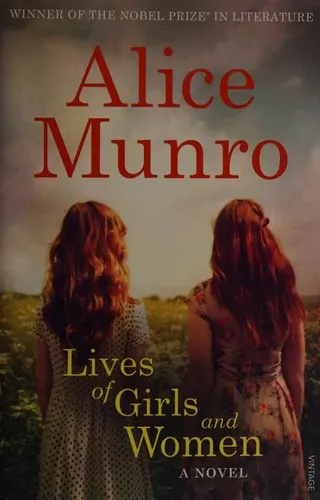
Books like Lives of Girls and Women
Munro makes a whole education out of glances, humiliations, family legends, sexual discoveries, and sudden acts of defiance. Del Jordan’s world feels narrowly bounded yet inexhaustible, because every ordinary encounter enlarges her understanding of power—and of the unruly person she might become.
If you liked Lives of Girls and Women, you’ll love these
Not lookalikes — kindred books. Each one shares something essential with Lives of Girls and Women, and we tell you exactly what.
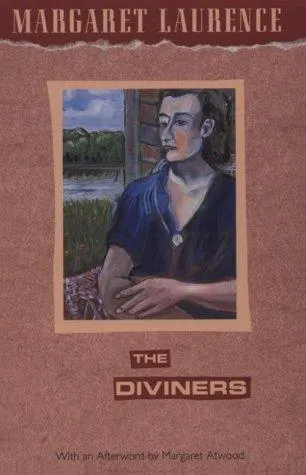
Morag Gunn, a successful writer looking back from middle age, is one of Canadian fiction’s great answers to Del Jordan: a woman who must turn the stories imposed on her—about class, respectability, sex, and belonging—into material for a life of her own.
Laurence has Munro’s gift for making a small community feel both intimate and punitive, and for showing that artistic ambition grows out of embarrassment, anger, appetite, and watchfulness rather than noble abstractions. But The Diviners is broader and more turbulent, moving between memory, invented history, and Morag’s present with magnificent confidence. Winner of the Governor General’s Award and long regarded as a landmark of Canadian literature, it offers the exhilarating sight of a female consciousness claiming authority over everything that once tried to define it.

If what stays with you is Munro’s understanding of girls raised among women—and of how eccentricity can look like failure from inside a respectable town—read Housekeeping. Ruth and her sister Lucille come into the care of their drifting aunt Sylvie, whose indifference to ordinary domestic rules gradually becomes impossible for the town, and for the sisters, to ignore.
Robinson transforms household objects, weather, silence, and absence into a haunting inquiry about what it costs to belong. Her prose is more dreamlike than Munro’s, but it has the same exactness about shame and the same refusal to sentimentalize female freedom. This PEN/Hemingway-winning debut has inspired unusual devotion for decades: slim, strange, and nearly inexhaustible, it is the kind of novel whose images quietly alter the furniture of your mind.
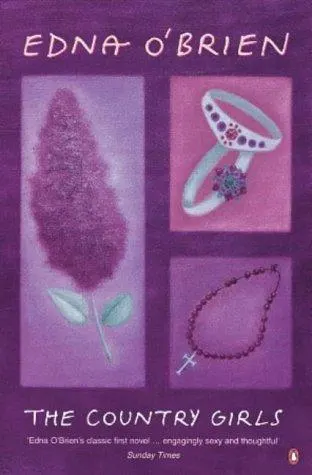
Caithleen and Baba are not simply two girls escaping constraint; they are two brilliantly opposed ways of meeting the world. Caithleen is romantic, vulnerable, and hungry for transformation, while Baba is mocking, strategic, and impatient with illusion. Their friendship gives O’Brien room to be tender and savage at once.
A lover of Del Jordan will recognize the charged mixture of desire, self-invention, bad judgment, and acute observation. O’Brien writes about female appetite without asking permission and about respectability as both shelter and trap. The novel’s candor led to its banning in Ireland, but what made it endure—and made the Country Girls trilogy foundational—is not scandal alone. It is the quick, intimate voice, funny even when wounded, that catches young women discovering how little the approved stories of love can be trusted.