Books like List of Oz books
—because Oz is at its best when boundless invention, sly satire, and genuine moral feeling travel together. These three books likewise treat absurdity as a way of seeing the world more clearly.
If you liked List of Oz books, you’ll love these
Not lookalikes — kindred books. Each one shares something essential with List of Oz books, and we tell you exactly what.
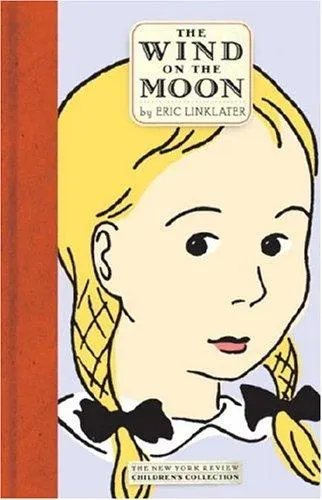
Dinah and Dorinda are warned that the wind on the moon may make them behave badly—and they promptly embrace misbehavior with magnificent enthusiasm. Their adventures have Baum’s exhilarating disregard for ordinary limits: transformations, talking animals, pompous authorities, and impossible predicaments arrive with perfect matter-of-factness.
Yet the nonsense has purpose. Linklater pits unruly imagination against cruelty and self-importance without turning the story into a sermon. Winner of the Carnegie Medal, this is a gloriously anarchic classic for readers who cherish Oz as both playground and humane republic.
Twelve-year-old September leaves an ordinary home for Fairyland, where rules become literal, objects have opinions, and every new companion feels as singular as the Patchwork Girl or Tik-Tok. Valente understands the deep pleasure of Baum’s journey structure: one strange district opens into another, each with its own logic, language, and inhabitants.
This is no imitation, however. Its lush, witty prose and awareness that wonder can carry a cost give it a character entirely its own. The first self-published novel to win the Andre Norton Award, it has become a modern touchstone of children’s fantasy—and perhaps the clearest proof that Oz’s adventurous spirit is still alive.
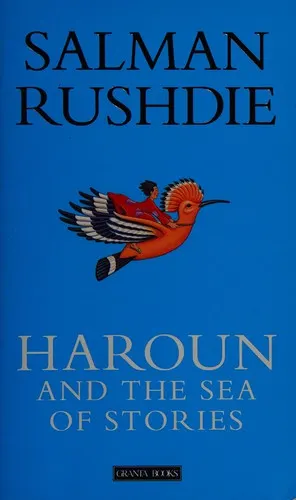
When Haroun’s father, a celebrated storyteller, suddenly loses his gift, Haroun is drawn toward a world where stories are manufactured, polluted, defended, and renewed. Like Baum, Rushdie builds fantasy out of playful literalism: figures of speech become geography, ideas acquire bodies, and ridiculous names conceal sharp observations about power.
The comedy is quick, warm, and exuberant, but beneath it lies an urgent defense of imagination against people who demand silence and sameness. Written by one of the major novelists of his generation, Haroun and the Sea of Stories is unusually accessible without being slight—a book that gives nonsense the dignity Baum knew it deserved.