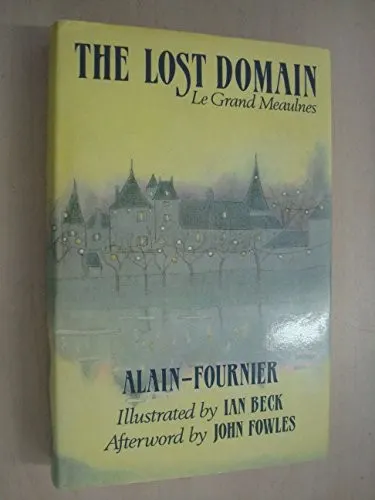
Books like Le Grand Meaulnes
—because the real spell lies not simply in lost youth, but in the way longing turns a place, a person, and a single summer into an unreachable country. These three novels cast that same spell in strikingly different ways.
If you liked Le Grand Meaulnes, you’ll love these
Not lookalikes — kindred books. Each one shares something essential with Le Grand Meaulnes, and we tell you exactly what.
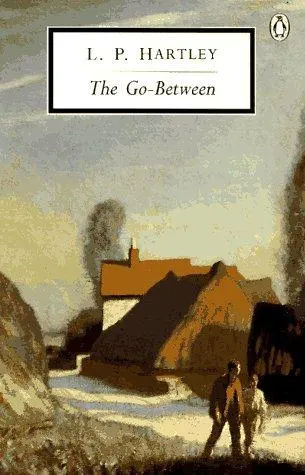
An elderly man opens a diary from the summer of 1900 and is pulled back into his thirteen-year-old self: dazzled by a grand country house, awakening to adult desire, and entrusted with messages whose significance he only partly understands.
Hartley shares Alain-Fournier’s gift for making childhood both enchanted and dangerous. The Norfolk estate becomes a lost realm like the mysterious domain in Le Grand Meaulnes, while the older narrator’s knowledge casts a shadow over every sunlit scene. Famous for the line “The past is a foreign country,” this is the rare novel that fully earns its aphorism: exquisitely controlled, emotionally devastating, and essential for anyone susceptible to stories of summers that shape an entire life.
A fugitive reaches an apparently deserted island, only to discover a gathering of elegant strangers who behave as if he does not exist. Among them is Faustine, whose presence becomes the center of his world.
What links this short Argentine masterpiece to Le Grand Meaulnes is the ache of glimpsing a perfect world from outside it. The island’s recurring conversations and ceremonies have the suspended, almost supernatural beauty of Alain-Fournier’s fête; desire feeds on distance, uncertainty, and the fear that the beloved vision may vanish if approached. Borges called its construction perfect, but the book is far more than an ingenious puzzle: it is one of literature’s purest expressions of love for the unattainable.
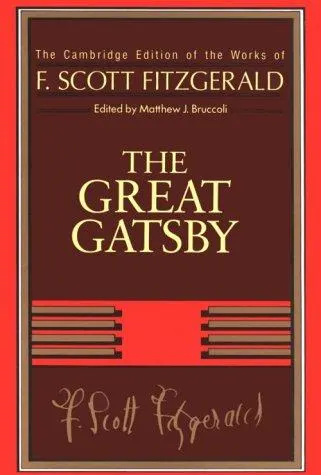
Seen through Nick Carraway’s watchful, divided loyalty, Jay Gatsby is less a social climber than a man who has built his life around one radiant, impossible recovery. Like Meaulnes, he possesses the dangerous charisma of someone pursuing a private revelation while others can only follow, admire, and eventually reckon with the cost.
Fitzgerald’s parties glitter, but the novel’s true subject is the instant when promise hardens into memory. Its celebrated final pages have become part of literary culture because they name, with unmatched precision, the human compulsion to sail back toward what time has taken. Read after Le Grand Meaulnes, Gatsby’s mansion feels like another lost domain—and Gatsby like the grown man Augustin Meaulnes might have become if he had never stopped chasing it.