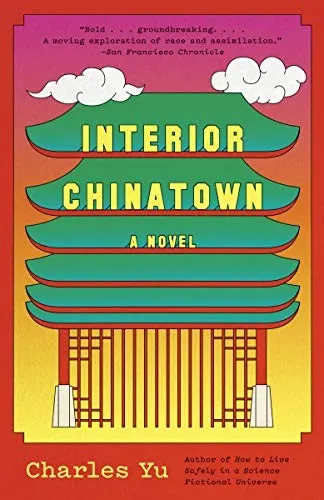
Books like Interior Chinatown
Each of these novels pulls up the painted floorboards of American life: beneath the stock characters and familiar scripts, whole families are waiting to be seen.
If you liked Interior Chinatown, you’ll love these
Not lookalikes — kindred books. Each one shares something essential with Interior Chinatown, and we tell you exactly what.
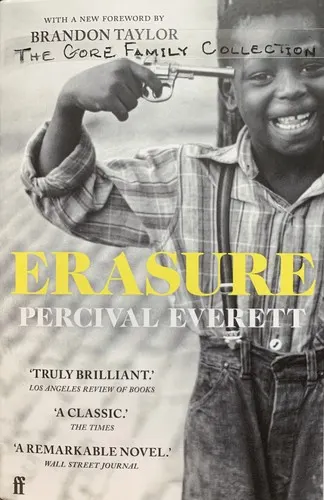
Thelonious “Monk” Ellison, a Black novelist exasperated by the publishing industry’s appetite for stereotyped Black suffering, writes a grotesque parody of the book it wants—and watches the joke escape his control. Like Charles Yu, Percival Everett turns metafiction into both a weapon and a source of escalating comedy: who gets to define authenticity, and what happens when the role assigned to you becomes more successful than you are?
But Erasure is not merely an ingenious takedown of literary racism. Monk’s family life gives the satire its accumulating grief and tenderness, much as Willis Wu’s longing to become more than “Generic Asian Man” eventually opens onto questions of inheritance, intimacy, and self-worth. Everett’s breakthrough novel is now recognized as a modern classic, and its adaptation, American Fiction, won the Academy Award for Best Adapted Screenplay. The original is stranger, sharper, and harder to contain.
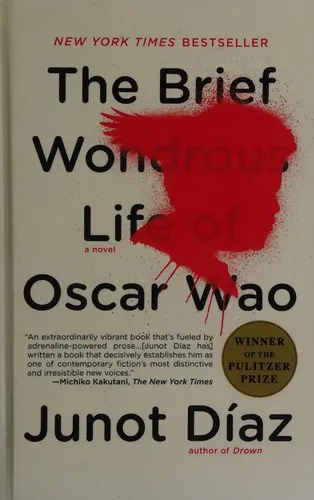
Oscar de León understands himself through fantasy novels, comics, anime, and science fiction—even as history has already drafted him and his Dominican family into a far crueler story. That collision between pop-cultural narrative and lived identity should feel immediately electric to an admirer of Interior Chinatown. Both novels ask whether genre offers an escape from imposed roles or simply supplies new costumes for them.
Díaz’s exuberant, footnote-riddled narration can pivot from a joke to political horror to romantic yearning in a few lines. The result is a family saga whose formal bravado never obscures its emotional stakes. Winner of the Pulitzer Prize and the National Book Critics Circle Award, Oscar Wao became beloved because its voice seemed genuinely new; it still feels less like a book following rules than one inventing the language it needs.
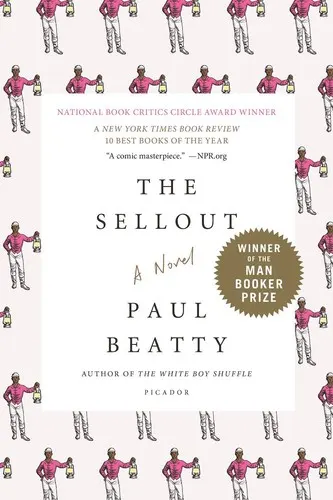
If the comic audacity of Interior Chinatown was what thrilled you—the willingness to push a premise past good taste until American absurdity exposes itself—read The Sellout. Its narrator, a Black farmer from a vanished Los Angeles neighborhood, undertakes an outrageous attempt to restore his community’s place on the map. Beatty makes every social category unstable: victim and performer, rebel and stereotype, earnest civic project and obscene joke keep changing places.
Where Yu’s screenplay machinery reveals how racism assigns parts, Beatty uses stand-up rhythms, legal farce, and verbal overload to show a nation trapped inside its own contradictions. Yet the novel’s fury comes from attachment: to a neighborhood, to people mangled by caricature, and to the possibility of belonging without lying about what belonging costs. The first American novel to win the Booker Prize, it is not respectable satire but dangerous satire—the kind that leaves conventional language looking permanently inadequate.