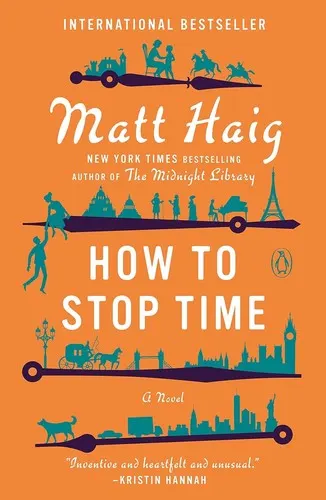
Books like How to Stop Time
Melancholy without despair, these books treat extraordinary relationships with time as ways of asking ordinary, urgent questions: whom do we love, what do we remember, and what makes a finite life matter?
If you liked How to Stop Time, you’ll love these
Not lookalikes — kindred books. Each one shares something essential with How to Stop Time, and we tell you exactly what.
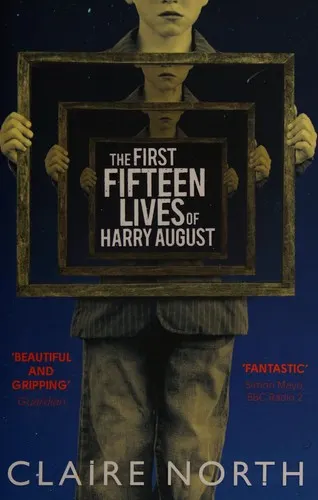
Harry repeatedly returns to the beginning of his life with his memories intact. Claire North turns that premise into both a gripping intellectual puzzle and a moving portrait of accumulated loneliness: knowledge becomes isolating, history loses its novelty, and companionship grows unimaginably precious.
Like Matt Haig, North keeps large philosophical questions tethered to a vulnerable human consciousness. Her novel is cooler and more intricate than How to Stop Time, with the momentum of a thriller, but it shares its fascination with memory as both gift and burden. Winner of the John W. Campbell Memorial Award, it is one of the rare time-bending novels whose emotional logic is as satisfying as its ingenious machinery.
A novelist on a remote Canadian island finds a Japanese teenager’s diary washed ashore and becomes absorbed in the life recorded there. From that simple opening, Ruth Ozeki builds a luminous meditation on time, grief, history and the strange intimacy that can exist between people separated by distance and circumstance.
This Booker-shortlisted novel has the humane curiosity that makes How to Stop Time so affecting: philosophical ideas never eclipse the lonely people who need them. Ozeki can move from adolescent wit to profound sorrow without surrendering warmth, and her playful treatment of time gradually makes reading itself feel like an act of rescue. It is expansive, compassionate and difficult to forget.
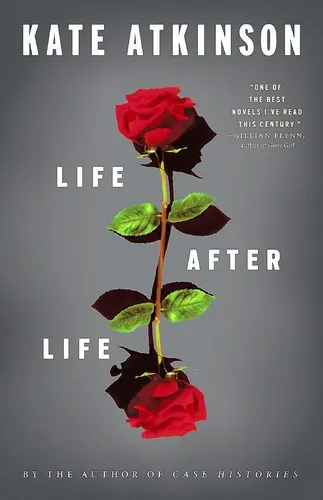
Ursula Todd is born in 1910—and then, in different versions of her story, lives again. Kate Atkinson uses repetition not as a gimmick but as an emotional instrument: tiny choices acquire enormous weight, happiness remains fragile, and twentieth-century history becomes something felt in kitchens, bedrooms and frightened bodies rather than merely recorded in textbooks.
Readers who loved Tom Hazard’s long view of history will recognize the tension between private desire and public catastrophe, but Atkinson offers a more formally daring experience. Scenes return altered, possibilities gather around one another, and ordinary domestic moments become unbearably precious. Winner of the Costa Novel Award, Life After Life is rightly celebrated as a novel that makes experimentation feel intimate—and makes a single human life seem both accidental and miraculous.