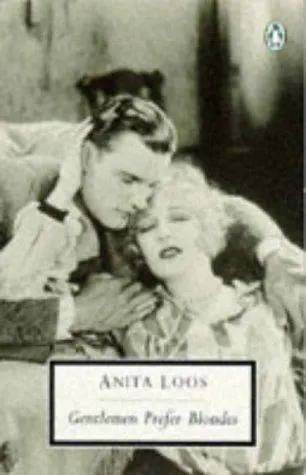
Books like Gentlemen Prefer Blondes
Lorelei takes up her diary at a gentleman’s suggestion, serenely confident that putting her thoughts on paper is another form of self-improvement—and the joke is already operating in several directions at once. These three novels offer similarly irresistible voices, sharp social vision, and heroines who understand more than polite society expects them to.
If you liked Gentlemen Prefer Blondes, you’ll love these
Not lookalikes — kindred books. Each one shares something essential with Gentlemen Prefer Blondes, and we tell you exactly what.

Sally Jay Gorce arrives in Paris determined to live—with alarming efficiency—as much as possible. Her narration has Lorelei’s greatest gift: every sentence simultaneously reveals her blind spots and proves her intelligence. Sally Jay is impulsive, theatrical, sexually adventurous, and wonderfully capable of turning catastrophe into anecdote.
Dundy’s 1958 debut became a bestseller and then a cult favorite because its comic momentum never suppresses its emotional precision. If Loos delighted you by making a supposedly frivolous young woman the funniest and most commanding person in the room, Sally Jay’s breathless, lemon-yellow whirl through Paris is indispensable.

Doris, a young German woman who wants to become a “glitter,” records her ambitions in a voice compounded of bravado, shrewd observation, mangled sophistication, and sudden poetry. Like Lorelei, she knows glamour is not mere decoration: for a woman without inherited power, it can be currency, armor, and an imaginative escape route.
Keun’s novel is darker beneath its sparkle. Published in 1932 and soon banned by the Nazis, it has since been restored to its place as a modern German classic. Doris’s idiom is so alive that reading her feels less like encountering a historical character than overhearing a brilliant, vulnerable contemporary invent herself sentence by sentence.
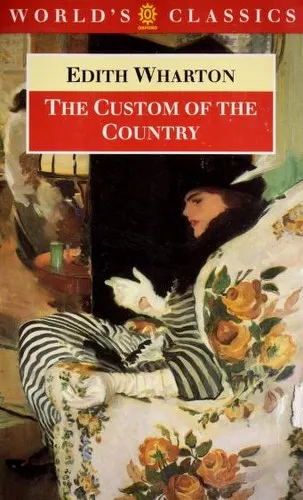
Undine Spragg lacks Lorelei’s comic diary voice, but she inhabits the same devastating truth: romance, status, and money are never separate subjects. Newly arrived in New York society, Undine studies what people possess, what they desire, and how they can be made useful. Wharton watches her without sentimentality—and without allowing the respectable people around her to claim moral innocence.
This is the grander, colder companion to Loos’s satire. Wharton turns drawing rooms, marriages, and financial arrangements into a merciless anatomy of appetite, while Undine’s inexhaustible forward drive makes the book ferociously readable. Anyone who admires how Loos lets a woman’s pursuit of luxury expose an entire culture should not miss Wharton’s most formidable social climber.