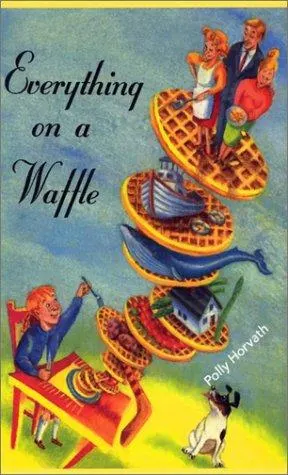
Books like Everything on a Waffle
While all Coal Harbour has given her parents up to the sea, Primrose Squarp keeps watch with a certainty no adult can shake. These novels share her bracing mixture of loneliness, comedy, stubborn hope, and care delivered in wonderfully peculiar forms.
If you liked Everything on a Waffle, you’ll love these
Not lookalikes — kindred books. Each one shares something essential with Everything on a Waffle, and we tell you exactly what.
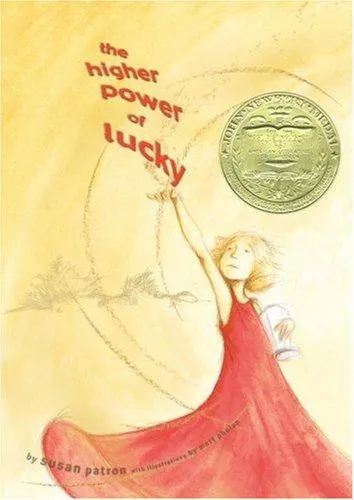
Lucky lives in a tiny desert settlement populated by recovering addicts, government-surplus experts, and other gloriously specific adults. Like Primrose, she studies their behavior with a child’s sharp eye while worrying that the precarious arrangement holding her life together may collapse.
Patron’s great gift is making eccentricity feel neither decorative nor condescending: every odd neighbor contributes to a genuine community. Lucky’s practical intelligence, private fears, and talent for misunderstanding adult language will feel immediately familiar to Horvath’s readers. This Newbery Medal winner is funny without trivializing abandonment and tender without becoming sugary—the rare book that understands how makeshift families become indispensable ones.
Mary Alice is sent to live with Grandma Dowdel, a formidable woman whose methods are outrageous, secretive, and usually more compassionate than they first appear. Peck builds the novel from superbly timed comic episodes, then lets their emotional meaning arrive quietly afterward.
Readers who loved Miss Bowzer’s recipes and Primrose’s encounters with Coal Harbour’s unmanageable adults will relish Grandma’s equally unconventional language of care. Food, schemes, and public embarrassment accomplish what sentimental speeches cannot. Although it stands perfectly well alone, this companion to A Long Way from Chicago won the Newbery Medal on its own merits. Grandma Dowdel is one of children’s literature’s unforgettable creations: terrifying, hilarious, and impossible not to love.
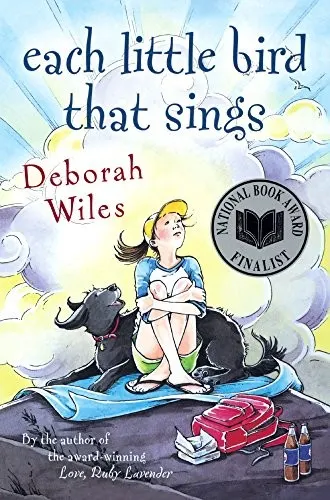
Comfort Snowberger has grown up in a family that runs a funeral home, so she knows the rituals of mourning—and believes she knows how to handle death. What she cannot so neatly manage are frightened cousins, changing friendships, and feelings that refuse to follow the rules.
Wiles matches Horvath’s remarkable tonal balance: sorrow sits beside slapstick, eccentric relatives remain fully human, and a child’s distinctive voice protects her until she is ready to understand more. Comfort, like Primrose, is resilient without being invulnerable; both girls turn practical knowledge and storytelling into emotional shelter. A National Book Award finalist, this is a warm, exuberant novel about grief that never asks its young heroine—or its reader—to stop laughing in order to take love seriously.