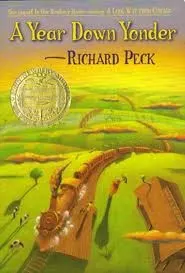
Books like A Year Down Yonder
True Grit earns its place here not through gun smoke or frontier adventure, but through the pleasure of watching a fiercely practical girl confront a world of evasive adults. These three novels share Richard Peck’s deadpan comedy, unsentimental tenderness, memorable eccentrics, and faith in competence as a form of love.
If you liked A Year Down Yonder, you’ll love these
Not lookalikes — kindred books. Each one shares something essential with A Year Down Yonder, and we tell you exactly what.
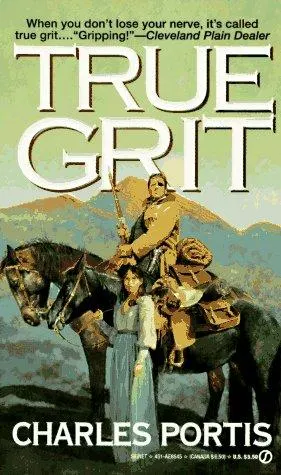
Fourteen-year-old Mattie Ross sets out to settle unfinished family business with formidable clarity, exact accounting, and no patience for foolishness. Imagine Mary Alice equipped with Grandma Dowdel’s nerve: Mattie sizes people up instantly, bargains ferociously, and narrates every absurdity in a voice so solemn that it becomes hilarious.
Portis’s novel is darker and more violent than Peck’s, but its deepest kinship lies in its moral comedy. Both writers admire action rather than speeches, and both understand that stubbornness can be courage wearing work clothes. Long cherished as a comic American classic, True Grit is far richer, stranger, and funnier than its Western label suggests.

When Ratchet’s self-absorbed mother sends her to stay with two ancient great-aunts in the Maine woods, she enters a household governed by bizarre stories, blunt observations, and its own crooked but humane logic. Polly Horvath gives the aunts the same exhilarating quality Grandma Dowdel possesses: they seem socially impossible until you realize they understand cruelty, loneliness, and loyalty better than respectable people do.
The comedy is more macabre than Peck’s, yet it performs the same magic—turning neglect and hardship into a tall tale without denying their sting. Winner of the National Book Award for Young People’s Literature, The Canning Season is an eccentric, fiercely comforting novel about the odd households that save us.
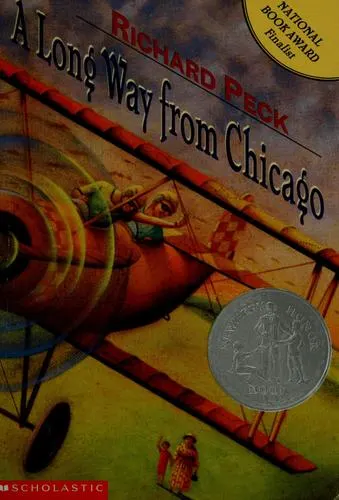
If Grandma Dowdel is the reason A Year Down Yonder became unforgettable, her earlier exploits are indispensable. Here Joey and Mary Alice visit her during successive summers, and Joey’s perspective reveals a slightly different Grandma: an alarming rural strategist whose poaching, bluffing, theatrical deceptions, and selective disregard for the law usually conceal an exact sense of justice.
This Newbery Honor book has the same episodic snap, Depression-era texture, and sudden turns from broad comedy to genuine feeling, but the siblings’ shared viewpoint gives it a livelier conspiratorial energy. Reading it deepens Grandma rather than merely repeating her; it shows why Peck created one of children’s literature’s great comic characters.