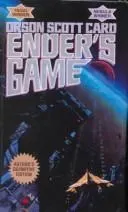
Books like Ender's Game
Ender’s Game makes brilliance feel exhilarating and horrifying at once: every ingenious victory proves Ender’s gift while tightening the adults’ grip on him. These novels share that tension between exceptional ability, institutional power, loneliness, and moral consequence.
If you liked Ender's Game, you’ll love these
Not lookalikes — kindred books. Each one shares something essential with Ender's Game, and we tell you exactly what.
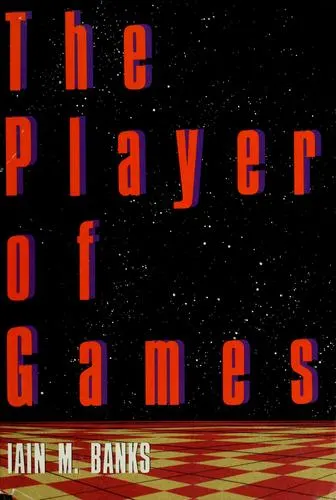
Jernau Morat Gurgeh is a master strategist whose sophisticated, comfortable life has left him dangerously bored. When he is recruited to compete in an empire-defining game, play becomes a way of reading an entire civilization—its values, cruelties, and hidden assumptions.
Like Card, Banks makes strategic thought genuinely dramatic: you feel the seduction of seeing further than everyone else. But the deeper kinship lies in the suspicion that the brilliant player may also be a piece on someone else’s board. Widely regarded as one of the best entrances to Banks’s beloved Culture series, this is the rare novel that can deliver both the rush of a decisive move and the disquieting question of who really engineered it.
Ged begins as the kind of prodigy Ender readers will recognize immediately: fiercely intelligent, isolated by his ability, hungry to prove himself, and too young to understand what his power may cost. His education in magic is not merely a sequence of lessons but a test of character, as pride and fear become forces as consequential as any spell.
Le Guin’s foundational fantasy novel is compact, grave, and extraordinarily precise. Where Ender’s Game asks what happens when adults weaponize a child’s gifts, Earthsea asks whether a gifted young person can take responsibility for what he unleashes. Generations of readers have carried Ged’s journey with them because it turns coming of age into something more demanding than triumph: the difficult achievement of becoming whole.

Charlie Gordon wants desperately to become intelligent. Chosen for an experimental procedure, he records his progress in a series of reports whose changing language lets the reader experience his transformation from inside. Few novels make intelligence feel so immediate—not as a score, but as perception, memory, loneliness, and the painful ability to understand how others have used you.
That makes this Nebula-winning novel a powerful companion to Ender’s Game. Both place an unusually vulnerable person inside a project run by confident experts, then ask whether those experts’ grand aims excuse their manipulation. Charlie’s voice gives the book an intimacy all its own, and its emotional force has made it one of science fiction’s most enduringly cherished novels. Missing it means missing one of the genre’s clearest demonstrations that a sharpened mind does not protect a human heart.