Books like Empire Falls
You likely loved Empire Falls not simply for its Maine town, but for Russo’s ability to see economic decline, private failure, and ordinary decency at once—then make the whole human tangle both funny and heartbreaking. These three novels share that generous moral vision.
If you liked Empire Falls, you’ll love these
Not lookalikes — kindred books. Each one shares something essential with Empire Falls, and we tell you exactly what.
The essential next Russo is not the novel most like Empire Falls in scenery, but the one that most fully shares its comic compassion. Sully is an aging, injured laborer in the deteriorating town of North Bath: irresponsible, stubborn, and somehow indispensable to everyone around him. As with Miles Roby, his apparent passivity conceals a complicated struggle over dignity, obligation, and what a person owes the place that has diminished him.
Russo turns grudges, bad jobs, municipal squabbles, and lifelong disappointments into superb social comedy without treating working-class lives as quaint or pitiable. The town gradually becomes a moral ecosystem in which even minor characters have claims on your sympathy. Paul Newman’s celebrated film performance made Sully famous, but the novel’s deeper pleasure is Russo’s capacious narration: funny enough to disarm you, humane enough to leave a bruise.

Haruf’s National Book Award finalist offers the communal warmth of Empire Falls in a radically different style. Where Russo is expansive and comic, Haruf is spare, quiet, and almost musical. In Holt, Colorado, a teacher, two isolated brothers, and a pregnant teenager begin moving into one another’s lives; the drama lies less in startling events than in hesitant acts of shelter and trust.
What will feel familiar is Haruf’s refusal to divide people neatly into winners and failures. Loneliness is everywhere, but so is the possibility that awkward, unglamorous kindness can become a form of rescue. Plainsong has inspired unusual reader devotion because it makes goodness dramatically compelling without making it easy or sentimental. Its plain surface hides an accumulating emotional force that is difficult to shake.
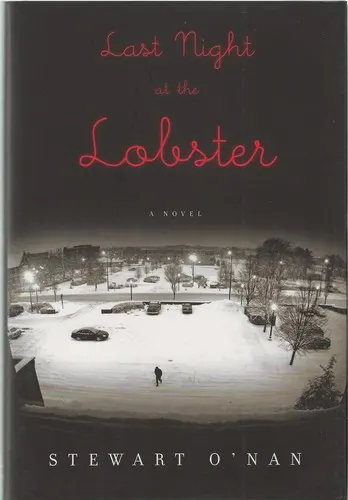
This beautifully compressed novel follows Manny DeLeon through the final shift of a closing chain restaurant in a snowstorm. Its scale is tiny beside Empire Falls, yet it contains the same understanding that a workplace can be a community, a hierarchy, a refuge, and a source of humiliation all at once.
O’Nan notices everything: the manager’s anxious calculations, the unreliable staff, the corporate rituals that continue even when the restaurant has no future, and the tenderness concealed inside professional routine. Manny, like Miles Roby, is a decent man trying to fulfill obligations that the larger economy regards as disposable. In barely more than a hundred pages, O’Nan gives service work the gravity usually reserved for epic subjects. Missing it would mean missing one of contemporary fiction’s clearest, most moving portraits of ordinary competence under pressure.