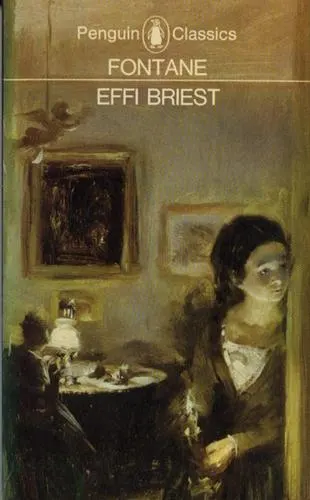
Books like Effi Briest
Beneath Hohen-Cremmen’s plane trees, Effi abandons her embroidery for the swing, while the adult world is already preparing to confine her. These novels share Fontane’s humane irony, social precision, and mastery of lives shaped by pressures that scarcely need to be spoken aloud.
If you liked Effi Briest, you’ll love these
Not lookalikes — kindred books. Each one shares something essential with Effi Briest, and we tell you exactly what.

Wharton opens with Lily Bart alone in a railway station—a small breach of convention that immediately shows how closely she is watched. Like Fontane, Wharton understands society not as a backdrop but as a system of glances, invitations, money, gossip, and apparently trivial choices. Lily is intelligent enough to perceive the trap, yet dependent upon the very world that built it.
One of Wharton’s acknowledged masterpieces, the novel has Effi Briest’s rare balance of sympathy and unsentimental clarity. Its brilliance lies in making social judgment feel both diffuse and crushing: no single villain controls Lily’s fate, because nearly everyone helps enforce the rules. If you loved Fontane’s quiet exposure of collective cruelty, Wharton’s elegance will feel exhilarating—and devastating.
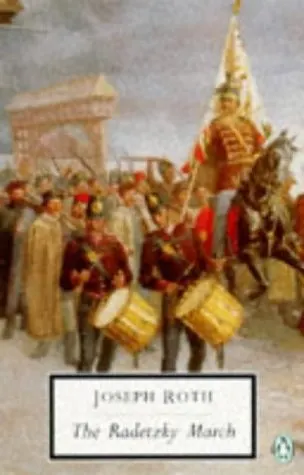
The opening act—a soldier saving the Habsburg emperor and being rewarded with nobility—becomes, in Roth’s hands, the beginning of a family’s estrangement from itself. That is the kinship with Effi Briest: both novels show how institutions colonize private feeling. Rank, honor, military ritual, and obedience become habits so deeply internalized that people mistake them for character.
Widely regarded as Roth’s masterpiece, The Radetzky March moves with ceremonial grace while its dry, compassionate narrator notices every absurdity. Readers who were fascinated by Instetten—not simply as a cold husband, but as a man imprisoned by his own idea of duty—will find Roth indispensable. Few novels make a doomed social order seem at once so ridiculous, beautiful, and human.
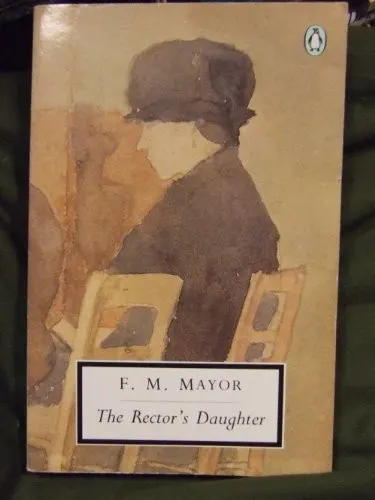
Mary Jocelyn lives in an English rectory, caring for an exacting father and inhabiting a life whose narrowness everyone treats as natural. Mayor builds her world from calls, parish obligations, restrained conversations, and long familiarity—the modest materials from which an entire emotional prison can be constructed.
This is the closest match for readers who treasure Fontane’s understatement. Mayor never begs for pity or announces where the deepest wounds lie; she trusts pauses, misplaced courtesies, and the discrepancy between what Mary feels and what she can permit herself to say. First published in 1924, the novel has endured as a quietly rediscovered classic, cherished for its psychological exactness. Missing it would mean missing one of the finest English examples of tragedy conducted almost entirely below the level of speech.