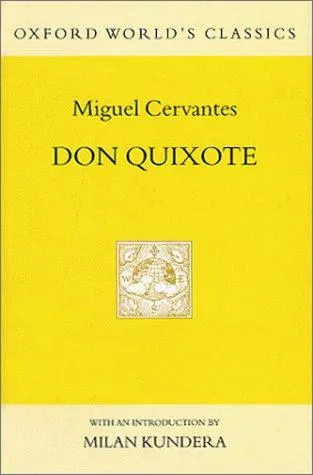
Books like Don Quixote
Don Quixote’s comedy never settles its deepest question: does reality expose the knight’s ideals as foolish, or do his ideals expose reality as shabby?
If you liked Don Quixote, you’ll love these
Not lookalikes — kindred books. Each one shares something essential with Don Quixote, and we tell you exactly what.
Sterne inherits Cervantes’s most exhilarating discovery: a novel need not travel in a straight line to reach profound truths. Tristram attempts to narrate his life, but family anecdotes, learned arguments, typographical jokes, and irresistible digressions continually obstruct him. The delay becomes the story.
Like Cervantes, Sterne treats the reader as both companion and comic victim. Beneath the formal mischief lies immense affection for eccentric, impractical people, especially Tristram’s gentle Uncle Toby. A foundational work of experimental fiction, it still feels less like a monument than an intelligence improvising in your presence. Anyone who loves how Don Quixote turns narrative disorder into humanity should not miss its most brilliant English descendant.
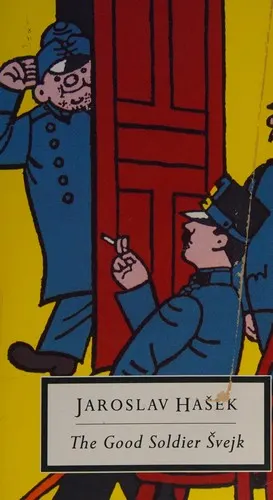
Švejk is either an obedient simpleton or a saboteur of almost supernatural subtlety. Arrested after loose talk in a Prague pub, he meets every demand of the Austro-Hungarian bureaucracy with literal compliance, inexhaustible politeness, and another wildly irrelevant anecdote. The novel never resolves whether he misunderstands authority or understands it perfectly.
That ambiguity produces comedy very close to Cervantes’s: apparent foolishness becomes a weapon against a world whose accepted wisdom is plainly insane. Hašek’s unfinished masterpiece is one of the great antiwar satires, but its force comes from voices rather than sermons—official jargon, tavern gossip, patriotic bombast, and Švejk’s endless stories grinding institutions into absurdity. He is the rare comic hero whose foolishness grows more subversive with every page.
An indolent Dublin student writes a novel about a novelist who is himself writing a novel, filling it with borrowed cowboys, legendary Irish heroes, devils, poets, and other incompatible creatures. Instead of smoothing these materials into a respectable fiction, O’Brien lets their styles collide spectacularly.
This is Cervantine comedy sharpened for the age of modernism: books infect reality, genres mock one another, and authors discover that their creations may not accept the roles assigned to them. Yet its intricate construction never suppresses its pub-bred wit or delight in magnificent nonsense. Long a cult classic and a writers’ favorite, At Swim-Two-Birds offers the rare experience of seeing the novel dismantle itself while becoming more alive.