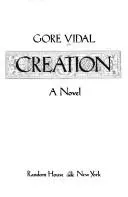
Books like Creation
How many of civilization’s supposedly eternal truths would still look eternal after a shrewd eyewitness had watched them being invented? These novels share Creation’s rare union of intellectual audacity, historical immersion, political irony, and a narrator close enough to power to distrust it.
If you liked Creation, you’ll love these
Not lookalikes — kindred books. Each one shares something essential with Creation, and we tell you exactly what.
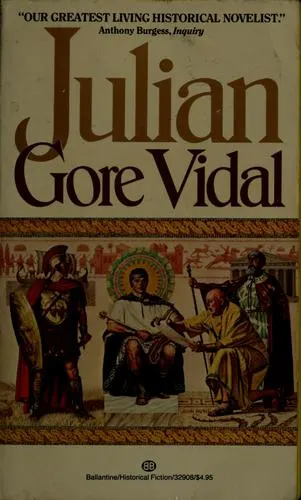
Vidal’s finest companion to Creation turns the emperor Julian’s attempt to resist Christianity into a contest over who gets to define reality. Julian tells his own story, while two former teachers interrupt the manuscript with corrections, mockery, and competing memories. The result is history as an argument conducted in the margins.
Like Cyrus Spitama, Julian is learned, privileged, observant, and hardly impartial. Vidal makes theology inseparable from appetite, vanity, administration, and imperial survival; doctrinal disputes matter because people build institutions—and persecutions—out of them. Often ranked among Vidal’s best historical novels, Julian has his characteristic wit at its sharpest and his skepticism at its most humane. If Creation made you wish Vidal would subject another age of faith to the same amused, merciless intelligence, this is indispensable.
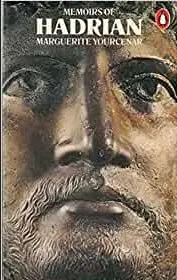
Hadrian addresses a long letter to the young Marcus Aurelius, examining the empire he has governed and the self he has never entirely mastered. The scale is Roman, but the experience is intimate: military frontiers, architecture, statecraft, travel, desire, illness, and death are all filtered through a mind determined to understand its own life without consoling lies.
Yourcenar lacks Vidal’s waspish comedy, but she matches his ability to make antiquity think rather than merely pose in costume. Her Hadrian weighs religions and philosophies as practical experiments in living, and the novel’s grave, exquisitely controlled voice creates the uncanny feeling that a lost ruler has truly begun to speak. Decades in the making and now widely regarded as a masterpiece of historical fiction, it offers what few novels can: immersion in power joined to sustained reflection on what power cannot conquer.
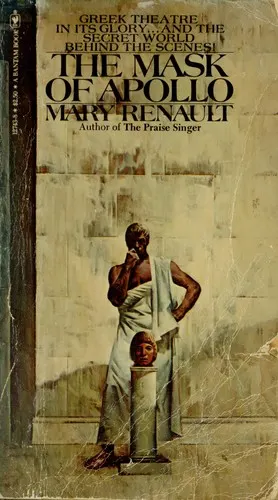
Renault approaches philosophy from an inspired angle: her narrator, Nikeratos, is an actor, a man professionally trained to detect when conviction becomes performance. Through him, the world of Plato and the disastrous temptations of political idealism acquires color, suspense, and painful immediacy.
This is the match for readers who loved Creation not simply for its famous thinkers, but for its suspicion of what happens when ideas meet rulers. Renault makes theatre a way of understanding public life: costumes, timing, vanity, courage, and the dangerous longing to believe that the right speech can reform power. Long cherished by admirers of Renault’s Greek novels, The Mask of Apollo combines formidable scholarship with an effortless human voice. Its Plato is neither marble saint nor modern lecturer, but a living intelligence whose hopes carry real stakes.