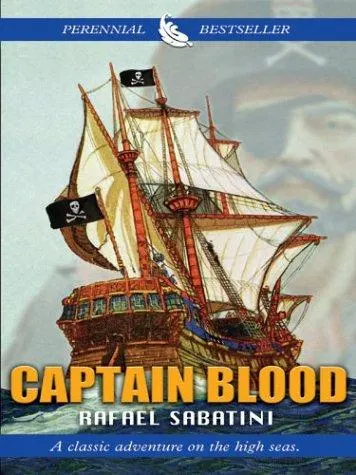
Books like Captain Blood
Captain Blood and Scaramouche show Rafael Sabatini turning injustice, audacity, and a magnificently capable hero into almost irresistible narrative momentum.
If you liked Captain Blood, you’ll love these
Not lookalikes — kindred books. Each one shares something essential with Captain Blood, and we tell you exactly what.
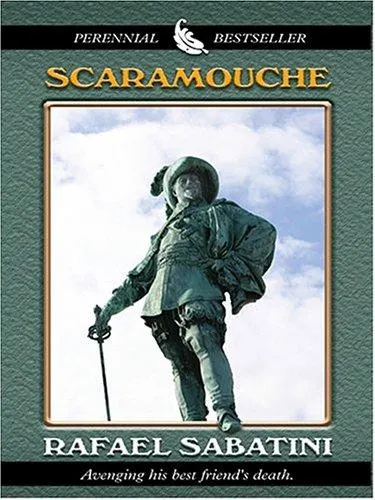
André-Louis begins as a skeptical young lawyer, but an aristocrat’s casual brutality drives him into roles he never expected: political firebrand, theatrical improviser, and swordsman. Like Peter Blood, he survives because intelligence is his sharpest weapon; every new identity reveals another reserve of nerve, wit, and competence.
Often ranked with Captain Blood as Sabatini’s finest novel, Scaramouche has the same polished irony and headlong set pieces, but its hero is more intellectually restless. The famous opening—describing a man “born with a gift of laughter and a sense that the world was mad”—announces an adventure in which comedy, anger, romance, and principle continually cross blades. Missing it would mean leaving Sabatini’s other great virtuoso performance unread.

Rudolf Rassendyll, an English gentleman with more charm than purpose, discovers that his uncanny resemblance to a foreign king may be the only thing preventing a coup. What follows is wonderfully economical: disguises, divided loyalties, dangerous courtesies, and a romance made more powerful by the demands of honor.
A Captain Blood admirer will recognize the pleasure of watching an easygoing man become formidable when circumstances finally deserve him. Hope’s novel is leaner than Sabatini’s, but it has the same clean gallantry and refusal to let sentiment weaken suspense. Its invented kingdom, Ruritania, became the name for an entire species of romantic adventure; the original remains so swift and poised that most descendants feel like imitations.
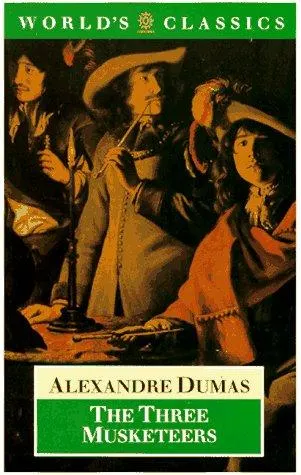
Young d’Artagnan arrives in Paris with a sword, a temper, and astonishing confidence, then manages almost immediately to challenge Athos, Porthos, and Aramis to duels. That collision launches a novel powered not simply by swordplay but by friendship, vanity, appetite, political cunning, and the exhilaration of talented people improvising under pressure.
Where Captain Blood offers one superbly resourceful hero, Dumas gives you a volatile fellowship whose banter is as entertaining as its adventures. The book is funnier, stranger, and more morally intricate than its countless adaptations suggest, with villains granted nearly as much magnetism as heroes. It helped establish the very grammar of the swashbuckler, yet in a good modern translation it still feels exuberantly alive—the foundational adventure novel that has never surrendered its crown.