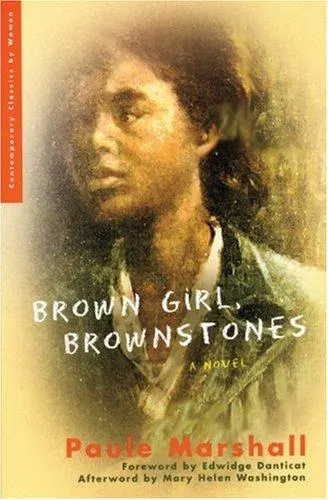
Books like Brown Girl, Brownstones
You were drawn not just to Selina Boyce’s coming of age, but to Marshall’s harder questions: what a family sacrifices for security, how a daughter claims herself against a formidable mother, and whether inherited culture can nourish without confining. These three novels carry those tensions in strikingly different directions.
If you liked Brown Girl, Brownstones, you’ll love these
Not lookalikes — kindred books. Each one shares something essential with Brown Girl, Brownstones, and we tell you exactly what.
Lucy leaves Antigua to work as an au pair in North America, determined to become someone her mother did not design. Readers who recognize the combustible love between Selina and Silla will immediately understand Lucy’s predicament: her mother is at once the person she most needs, the authority she must resist, and a voice she cannot evict from her mind.
Kincaid compresses that struggle into a short, fiercely lucid novel. Lucy’s observations are funny, merciless, and wounded, while her encounters with her affluent employers expose the assumptions hidden inside apparently enviable lives. As in Marshall, separation is never simple liberation: mother, homeland, colonial schooling, and gender have become entangled within the daughter’s consciousness. Few novels render a young woman’s self-invention with such exacting emotional intelligence. Kincaid’s enduring reputation rests heavily on this unmistakable voice; missing Lucy would mean missing one of Caribbean literature’s sharpest portraits of freedom and its costs.
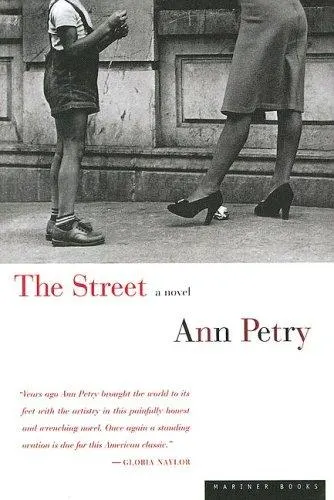
Brown Girl, Brownstones understands that a building is never merely a building: property can signify safety, status, belonging, and a crushing moral price. Ann Petry’s The Street begins with Lutie Johnson searching for an apartment in Harlem, and from its famous opening—in which the wind seems to assault the neighborhood—the city becomes an active pressure on every hope she carries.
Petry is darker and more relentless than Marshall, but she shares Marshall’s gift for showing economics entering the most intimate parts of life. Lutie’s ambition, pride, and longing for independence are neither mocked nor romanticized; they are tested against housing, work, racism, sexual power, and the seductive American promise that effort guarantees escape. Published in 1946, The Street became the first novel by a Black woman to sell more than a million copies, and its renewed stature is richly deserved. It is both a gripping urban novel and a devastating answer to the question lurking beneath Silla Boyce’s hunger for a brownstone: what happens when dignity itself is made unaffordable?
If what you cherish most in Marshall is the living presence of the Barbadian community—the gossip, rivalries, rituals, judgments, and sustaining collective memory—go next to Earl Lovelace’s Calvary Hill in Trinidad. At its center is Aldrick, who each Carnival becomes a dragon, turning costume and dance into an assertion of beauty and defiance. Around him, Lovelace gathers a whole neighborhood of people trying to decide what pride means when daily life offers them so little power.
The novel’s kinship with Brown Girl, Brownstones lies in its refusal to treat community as either picturesque refuge or oppressive relic. Tradition can give the residents a language for resistance, yet it can also become performance without change; dreams of advancement can promise freedom while estranging people from one another. Lovelace moves among his characters with warmth, irony, and a supple Trinidadian cadence that makes the neighborhood feel spoken into existence. Long regarded as a landmark of Caribbean fiction, The Dragon Can't Dance offers the rare exhilaration of a communal novel that can celebrate a culture while questioning the stories it tells about itself.