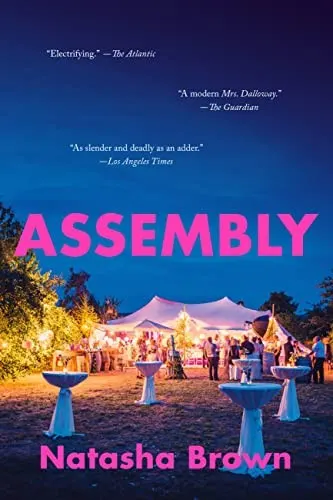
Books like Assembly
If Brown’s ruthless compression, fractured interiority, and exposure of the bargains demanded by respectable institutions held you fast, these three novels offer equally bracing forms of precision and refusal.
If you liked Assembly, you’ll love these
Not lookalikes — kindred books. Each one shares something essential with Assembly, and we tell you exactly what.

Kitamura shares Brown’s gift for making composure feel ominous. Her unnamed narrator, an interpreter at an international court in The Hague, must turn other people’s testimony into clean, official language while remaining professionally invisible. Every hesitation and euphemism becomes charged: who is protected by neutrality, and who pays for it?
Like Assembly, this is a novel about complicity experienced from inside a prestigious institution. Its cool surface conceals loneliness, moral unease, and an almost physical hunger for certainty. Kitamura’s sentences are so controlled that the smallest social misreading can feel like a trap closing. Few novels make silence this suspenseful.

This slim, formidable novel demonstrates how restraint can become an accusation. Shibli divides the book into two movements: an act of violence during the Nakba, rendered with chilling procedural exactness, and a Palestinian woman’s later fixation on uncovering what has been erased.
A finalist for the International Booker Prize, Minor Detail has the same refusal of consolation that gives Assembly its force. Both novels distrust the stories institutions tell about order, progress, and belonging; both show how history enters the body through routines, borders, rooms, and language. Shibli’s repetition and narrowed perspective generate extraordinary pressure. You finish it understanding that its brevity is not modesty but concentration.
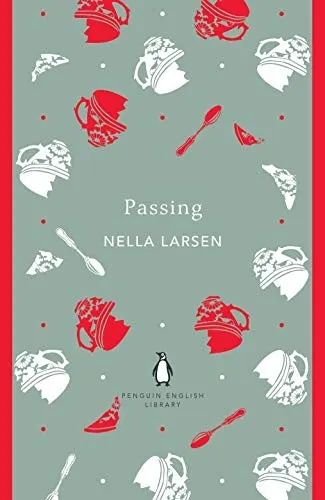
Larsen’s Harlem Renaissance classic is one of the great novels of social legibility: of being watched, interpreted, desired, and endangered by other people’s readings of you. From its opening encounter between Irene Redfield and Clare Kendry, identity is not treated as an essence but as a performance conducted under relentless scrutiny.
A reader of Assembly will recognize the intelligence with which Larsen examines aspiration, class, racial power, and the exhausting maintenance of a supposedly secure life. Yet Passing is also sensuous, psychologically treacherous, and alive with suppressed attraction and rivalry. In barely more than a hundred pages, Larsen creates ambiguities readers have argued over for generations. Brown’s novel belongs to a lineage of compressed, unsparing fiction; Passing is one of that lineage’s indispensable works.