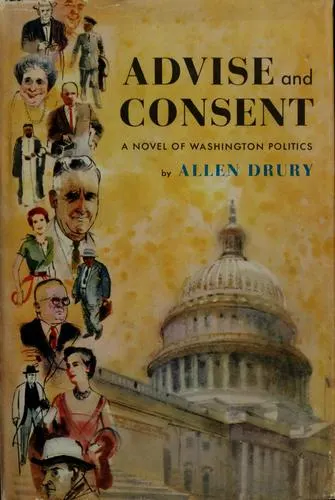
Books like Advise and Consent
The Caine Mutiny leaves Washington—and even civilian government—behind, yet it reaches the core of Allen Drury’s achievement: an institution under pressure, public duty entangled with private weakness, and a conflict in which every confident judgment proves dangerously incomplete. The other two choices bring that same moral and procedural intensity back into political life.
If you liked Advise and Consent, you’ll love these
Not lookalikes — kindred books. Each one shares something essential with Advise and Consent, and we tell you exactly what.
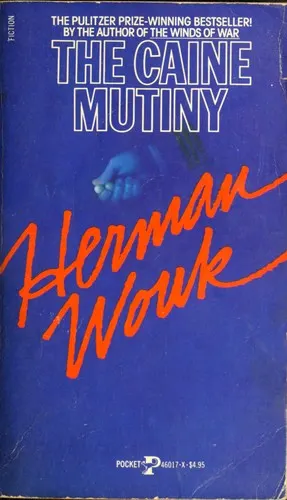
Willie Keith enters the wartime Navy with little sense of vocation, only to discover that regulations, rank, temperament, and honor cannot be separated. Like Drury, Wouk understands an institution as more than scenery: its rules shape every choice, while individual flaws can acquire enormous public consequences.
Most importantly, Wouk refuses the comfort of obvious heroes and villains. He keeps shifting the moral weight among competing ideas of loyalty, competence, and responsibility until judgment itself becomes the drama. Winner of the Pulitzer Prize, this is Wouk’s most enduring novel—and an essential companion to Advise and Consent for anyone who relished having their sympathies repeatedly overturned.
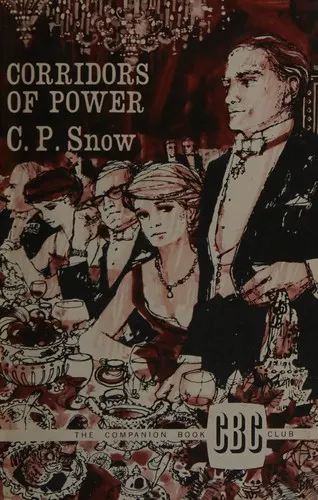
Roger Quaife, a rising British minister, decides to challenge his government’s nuclear policy. Snow then shows what conviction costs inside a governing system: memoranda must become alliances, allies must be counted and recounted, and a principled position must survive Cabinet rivalries, parliamentary arithmetic, civil-service caution, and social pressure.
Snow’s own experience in government gives the maneuvering an almost tactile credibility. Yet the novel is not merely accurate; it is shrewd about the way intelligence, vanity, friendship, and ambition enter every supposedly rational decision. Its title became political shorthand because few novels have captured so precisely how power actually travels through rooms, conversations, and compromises.
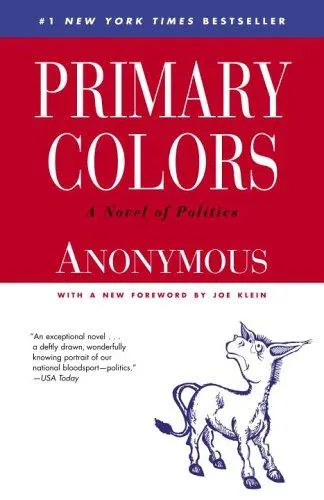
Henry Burton joins the presidential campaign of Jack Stanton, a Southern governor whose political gifts are inseparable from his unruly appetites. Published anonymously in 1996, the novel became a Washington sensation because readers were desperate to identify its author and real-life models. Its lasting value, however, lies in something richer than gossip.
Klein makes charisma feel like a genuine political force: Stanton can recognize suffering, explain policy, seduce a room, and exhaust everyone who believes in him. Henry’s growing conflict is therefore painfully credible—how much disorder, deception, and compromise can be tolerated in someone capable of doing real good? Readers who loved Drury’s collision between public fitness and private vulnerability will find this campaign novel funny, intimate, bruising, and almost impossible to put down.