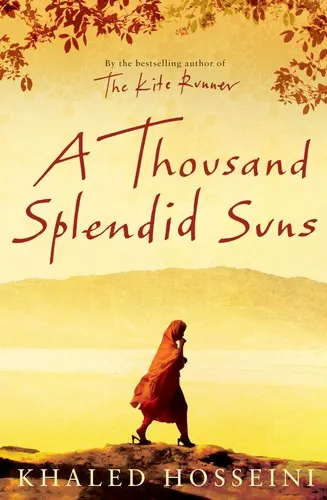
Books like A Thousand Splendid Suns
How can love preserve a person’s humanity when war, cruelty, and custom seem determined to erase it? These novels answer with the same emotional force as Hosseini’s: through hard-won solidarity, intimate sacrifice, and lives that make history painfully personal.
If you liked A Thousand Splendid Suns, you’ll love these
Not lookalikes — kindred books. Each one shares something essential with A Thousand Splendid Suns, and we tell you exactly what.
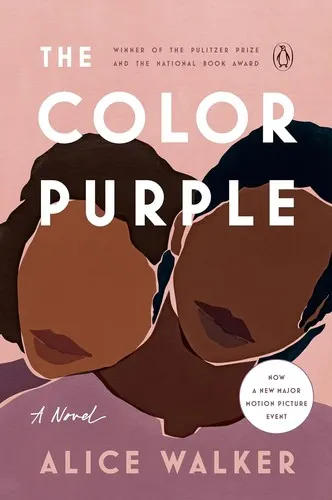
Celie begins by writing letters to God because she has no safe human listener. Her spare, unpolished voice records abuse and humiliation, but it also gradually becomes the instrument through which she recognizes her own worth.
Like A Thousand Splendid Suns, this is a novel about women creating forms of family in defiance of male violence. Walker makes companionship feel not merely comforting but revolutionary: being seen by another woman can alter what a life seems permitted to contain. Winner of both the Pulitzer Prize and the National Book Award, The Color Purple remains beloved because its movement from enforced silence toward self-possession is almost unbearably moving.
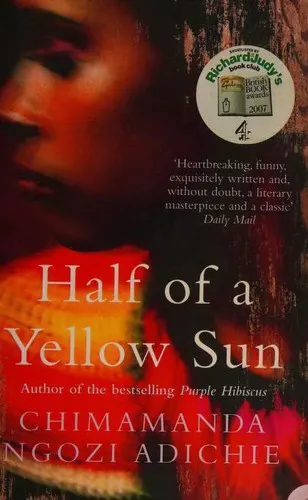
Adichie brings the Biafran War into kitchens, university rooms, friendships, and love affairs, showing how public catastrophe invades the smallest private choices. Her characters are intelligent, compromised, passionate people rather than emblems of suffering, and the novel’s shifting viewpoints make every certainty feel vulnerable.
Readers who admired Hosseini’s ability to turn history into immediate human experience will find the same gift here, sharpened by Adichie’s moral complexity and sensual detail. Half of a Yellow Sun won the Orange Prize and was later chosen as the Women’s Prize’s “Best of the Best”—recognition worthy of a novel that has become many readers’ defining imaginative encounter with Biafra.
As American bombs fall on Hanoi, a grandmother begins telling her granddaughter the story of a family repeatedly scattered by famine, political upheaval, and war. Nguyễn Phan Quế Mai, an acclaimed Vietnamese poet, gives the narration a lyrical clarity that makes remembered hunger, separation, and tenderness feel startlingly close.
Its deepest kinship with A Thousand Splendid Suns lies in its insistence that endurance is never abstract: it consists of meals found, stories preserved, and love maintained when history turns relatives against one another. Yet the novel is distinctly its own—multigenerational, steeped in Vietnamese language and memory, and attentive to wounds left out of familiar Western accounts. It offers the rare satisfaction of discovering both an intimate family story and an entire moral landscape.